
Exhibitors : Previous
Oro Grande Railroad
An Sn3 American layout by William Loyd
Scale 1:64
Gauge 14.2mm
Size 4" x 3.5"
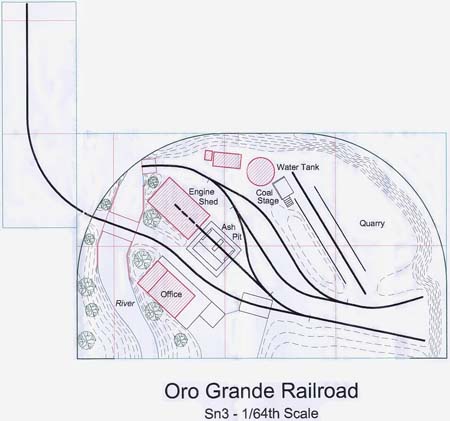
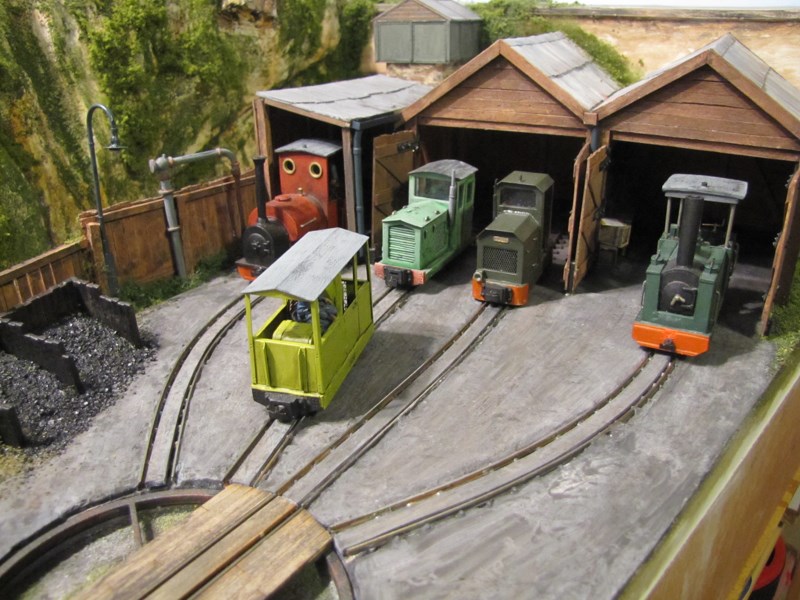
The layout depicts the end of a short branch on the Oro Grande Railroad, set in the United States of America. The reason behind the layout was the purchase of an “American Hoist & Derrick Ditcher” from Backwoods Miniatures, and to show this working in a quarry. The layout also features a small engine shed with ash pit and office.
The layout has hand built track and points at a track gauge of 14.2mm, with a selection of kit-built locomotives and rolling stock.
The buildings are all of wood construction, form either Banta Modelworks, or Western Scale Models, the ground cover is by Green Scenes, Heki and Woodland Scenics.
https://mail.narrowgaugenorth.org.uk/index.php/traders/previous-years/85-public-news/exhibitors-previous?start=130#sigProId04c220c3f7
Paradise Mining
A 1:25 scale layout by
Gauge 16.5mm (representing 18” gauge)
Size 8’6” x 2’
Following the success of my previous 1:25 scale layout on 16.5mm track (''
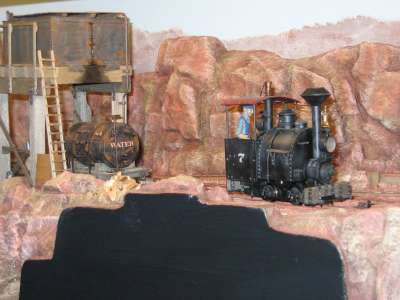
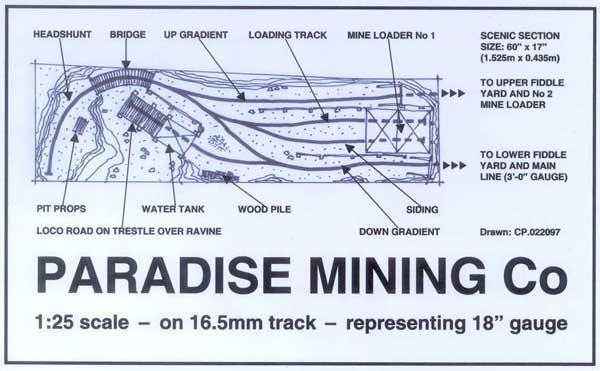
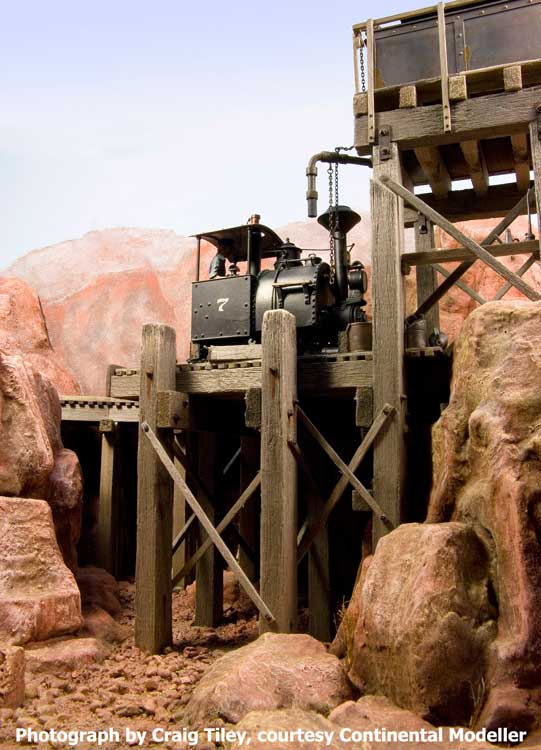
The stressed ply monocoque baseboard deliberately provides the opportunity for scenic and structure (bridge and trestle) modelling below as well as above the level of the railroad. Track is Peco and Fleischmann (the 10'' radius curve on the bridge deck). The two Porter locos (No 6 is the ''signature locomotive” for the project), vertical boiler loco No 9, and stock are scratch built in styrene and timber on Hornby chassis. The articulated steam loco (No 12) has an Athearn chassis. Extensive use has been made of distressed balsa wood for the modelling of structures.
The intent is to portray the activity at a reversing point in a mountainous setting, and in so doing it is hoped that the use of two locomotives for switching manoeuvres will be seen as appropriate rather than contrived. Within the scene is an ore loading bin, and another is imagined to be higher up the line. Gradients are presumed to be severe and therefore all trains are short (a maximum of three bogie cars) with the locomotive at the rear facing uphill in order to keep the firebox crown covered with water.
It being firmly believed that good design is essential for all aspects of a successful exhibition layout, particular attention has been paid to the arrangement, function, and ergonomics of the fiddle yard. This has been constructed on two levels, the lower yard includes a traverser, and with an ore car tippler so that operation is as much as possible ''hands off''.
Relevant published articles.
| 1 | Porter 0-4-0ST no 6 | Continental Modeller | Aug 2005 |
| 2 | Freelance ore cars | Continental Modeller | Aug 2007 |
| 3 | Continental Modeller | Jul 2008 | |
| 4 | Photo tour | Continental Modeller | Nov 2008 |
| 5 | Operation for Performance | Continental Modeller | Feb 2009 |

https://mail.narrowgaugenorth.org.uk/index.php/traders/previous-years/85-public-news/exhibitors-previous?start=130#sigProIdbbc16aabfc
Pempoul
A 1:50 layout by Gordon and Maggie Gravett
Scale 1:50
Gauge 18.2mm
As seen on BBC 4 - 23/01/2012
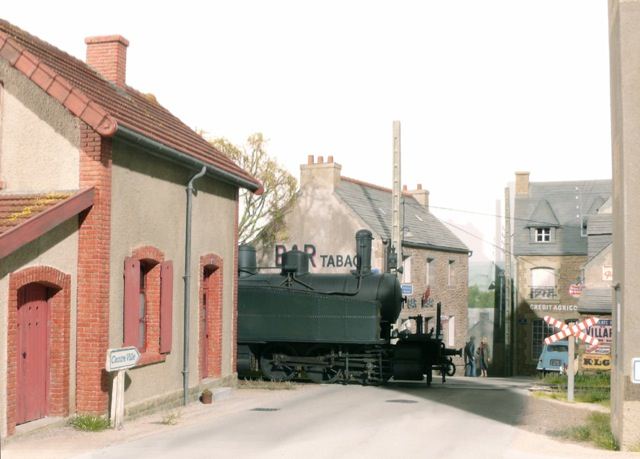
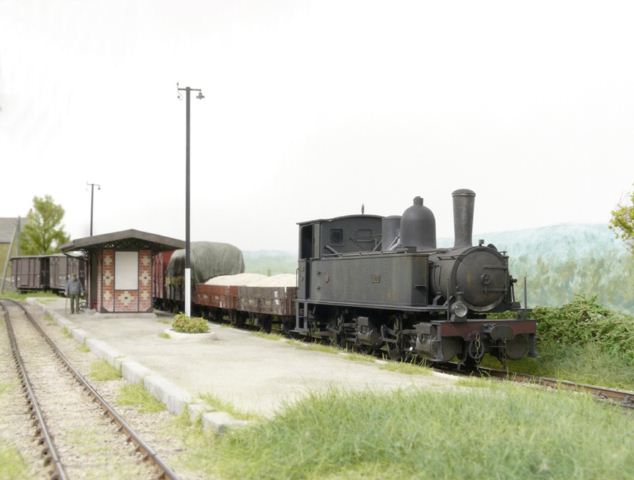
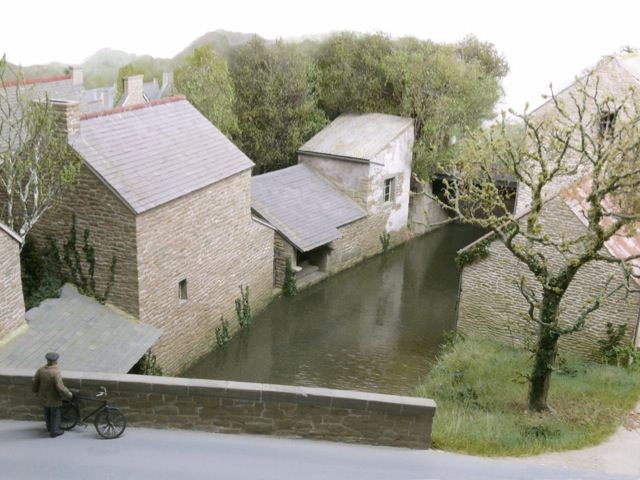
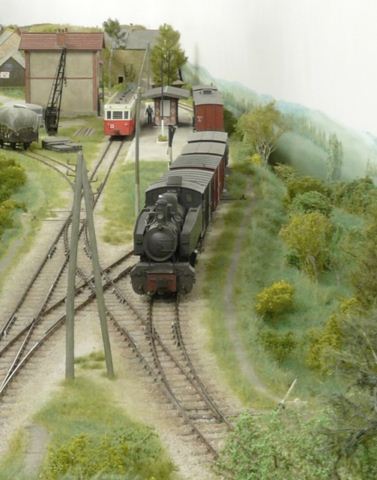
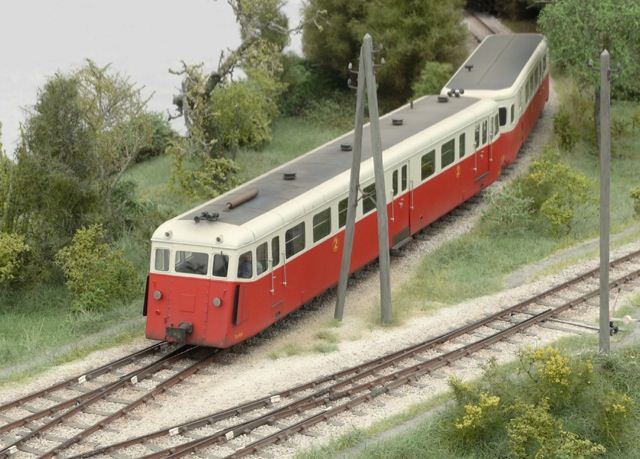
The metre gauge Reséau Breton system once served much of inland Brittany connecting rural villages and town to the SNCF main lines. It closed to all traffic in 1967. This fictitious scene depicts a small section of the railway in the last years of its life along with a taste of the area through which it ran.
There are very few (if any) commercial models or kits available for the Reséau Breton so, having accepted that everything was going to have to be built from scratch, we chose to build to a scale of 1:50. This had the advantage of giving easy to use metric dimensions: for example 1 metre = 20mm.
In an attempt to keep weight to a minimum, the baseboards utilise light weight Styrofoam (extruded polystyrene) in their construction. To the same end, the shells of the buildings are constructed from foam cored board and then covered with a thin layer of DAS modelling clay which is then scribed to represent the stone and brick of the area. Much use has also been made of the Noch ‘Gras-Master’ to give a realistic covering of ‘static grass’ to the landscape.
Having stated 20mm equates to 1 metre it may seem a contradiction to then build the track to the well proven 18.2mm gauge (EM standards). I can live with this inaccuracy and it has saved many hours in what was always going to be a very long term project.
Life is very leisurely in rural France so please take time to look at the display book on the front of the layout or feel free to interrupt to ask questions.
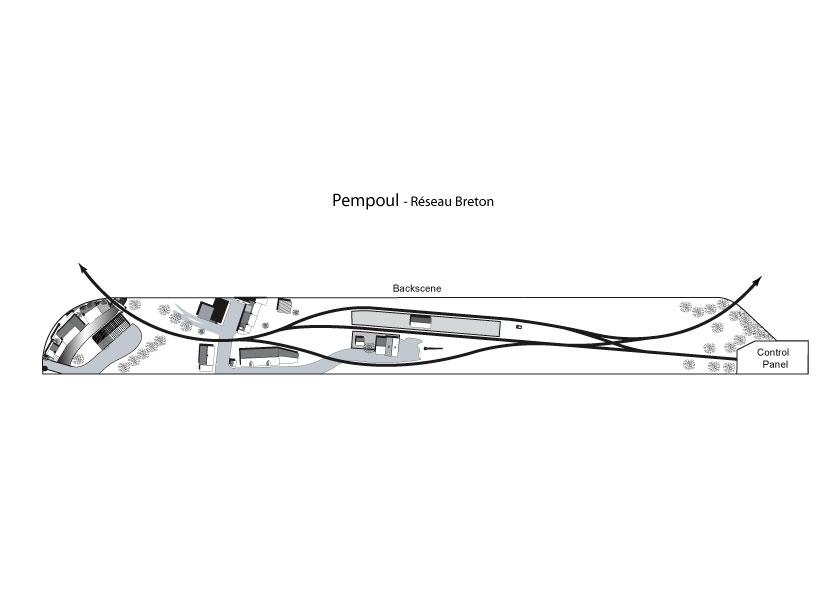
https://mail.narrowgaugenorth.org.uk/index.php/traders/previous-years/85-public-news/exhibitors-previous?start=130#sigProIdf3fefe117f
Pen-y-Bont
A O16.5 layout by Geoff Lord & Matt Hainsworth
Scale O16.5
Gauge 16.5mm
Size 15’ x 2’
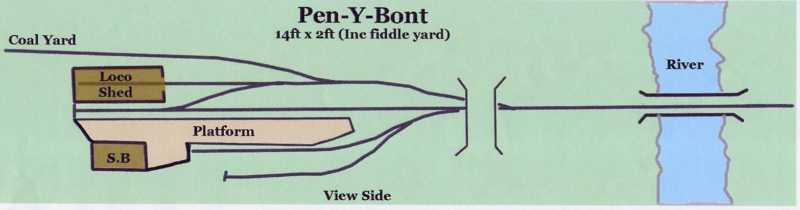
Pen-y-Bont is a freelance layout and is based on the narrow gauge lines of North Wales.
The scale is 7mm to the foot and the track gauge is 16.5mm. The locomotives and rolling stock are kit built from various manufacturers, with some scratch built examples. KADEE couplings are used on all the stock and uncoupling is achieved by strategically placed magnets under the track.The buildings are scratch built using foam board and Slaters embossed plasticard of various types.
https://mail.narrowgaugenorth.org.uk/index.php/traders/previous-years/85-public-news/exhibitors-previous?start=130#sigProId945be9602d
Penny Bridge
A 009 layout by Richard Ashworth
Scale 009 (4mm/1ft)
Gauge 9mm
Size 5’ x 7’
Nestled deep in the Yorkshire countryside lies the little village of Penny Woods. Its name derives from the nearby waterfall and the legend of the fairy, Paene, that lives beneath.
By the late 1960s the Penny Woods quarry had come to the end of its useful life and in 1968 the narrow gauge railway used for transporting the stone was taken over by the newly formed West Yorkshire Light Railway Preservation Society and turned into a tourist line taking visitors from the village to Penny Falls.
The baseboard is open construction, making it very light to transport, until, that is, we added all of the moulded plaster rockwork!
This is, for most of us, our first exhibition layout (one of our team had layouts when he was younger, but that was ages ago!). If you have any questions please ask one of the operators.
We hope you enjoy your visit to Penny Woods
Perryvale
Perryvale takes its inspiration from Sir Arthur Heywood’s Duffield Bank Railway (1874-98), and various other 15” gauge railways, right up to the present day. It attempts to capture something of the character and atmosphere of all these delightful railways. The layout represents a working Estate railway, that has developed to include a thriving tourist trade. There are two through stations on a section of the line wending its way through an impressive worked out quarry and forest landscape, and climbing to different levels.
The layout has been two years in the making and still has plenty to do on it.
https://mail.narrowgaugenorth.org.uk/index.php/traders/previous-years/85-public-news/exhibitors-previous?start=130#sigProId32d23602c6
Pfaffenbrücke
A HOe layout by H.G & E.Lawrence
Scale 009 (4mm/1ft)
Gauge 9mm
Size 16’ x 8’
Pfaffenbrücke is a fictictious narrow gauge line sited somewhere in the eastern part of Austria in an indeterminate fairly modern period. As well as service and freight workings a substantial number of steam trains operate.
The layout was inspired by a visit to the Ybbstalbahn, in particular the preserved section between Keinberg Gaming and Lunz am See known as the Bergstrecke (mountain section) and many of the structures are based on those found along the line.
The two girder bridges at Hühnernest and Wetterbach inspired the virtual scratch building of the viaduct in brass. The buildings are also scratch built using three layers of plasticard based on structures in the area.
The station was modelled using Pfaffenschlag as inspiration, hence the name of the layout.
Baseboards were built using traditional methods ie timber. Legs are integral.
Tillig track and points are on the public side with Peco N gauge points & track in the fiddle yard. All are powered by Seep point motors. Control is analogue but the layout has been wired to allow considerable flexibility. One controller is fixed and is by Modelex, the other is a walkabout.
Stock is a mixture of Lilliput, Bachman and Roco with a smattering of scratch built items. Couplings are standard.
The back scene was painted by Roy Crabtree.