
Exhibitors : Previous
Zerlos
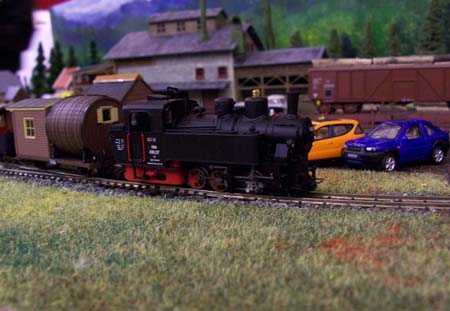
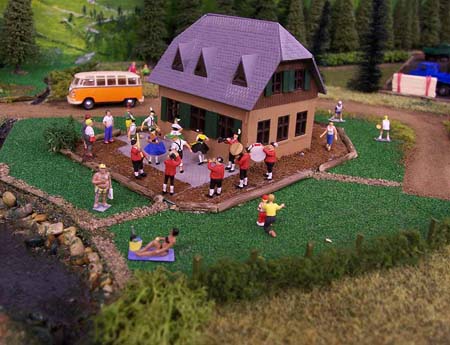
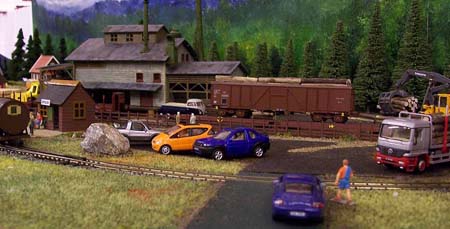
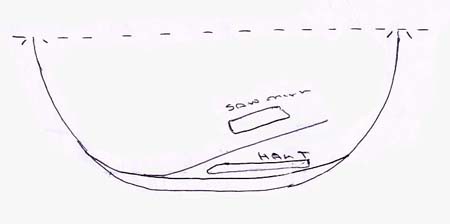
An HOe layout by Jonathan Stockwell
Scale 3.5mm/1ft
Gauge 9mm
Size 5’ x 3.5’


https://mail.narrowgaugenorth.org.uk/index.php/traders/previous-years/85-public-news/exhibitors-previous?start=210#sigProId883fd02e7d
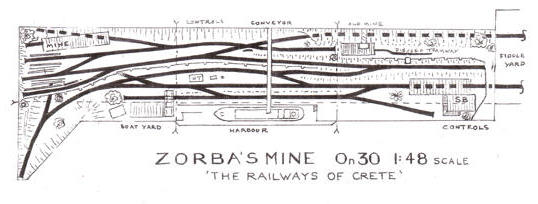
Zorbas Mine – The Railways of Crete
ORGANISMOS SIDIRODRODROMWN THS KRHTHS
A layout by Baz Ward and Friends
Scale: 1:48
Gauge 16.5mm [On30]
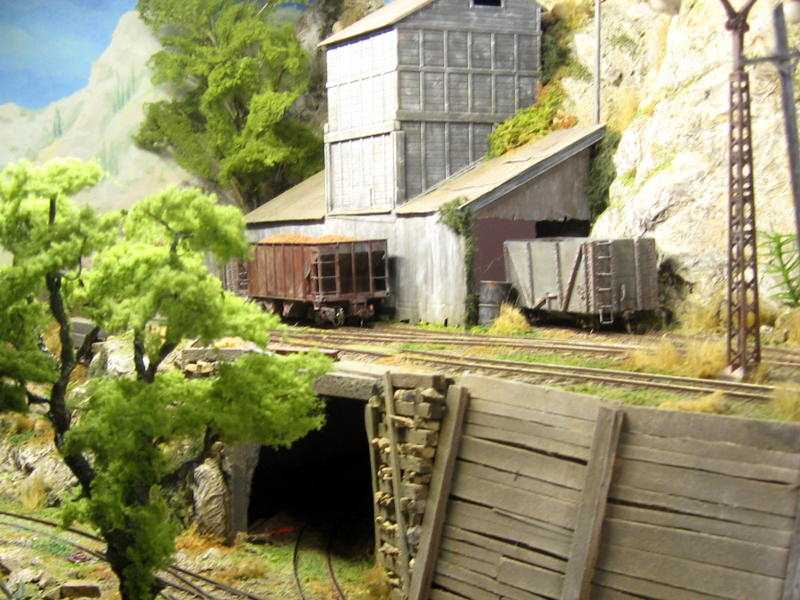
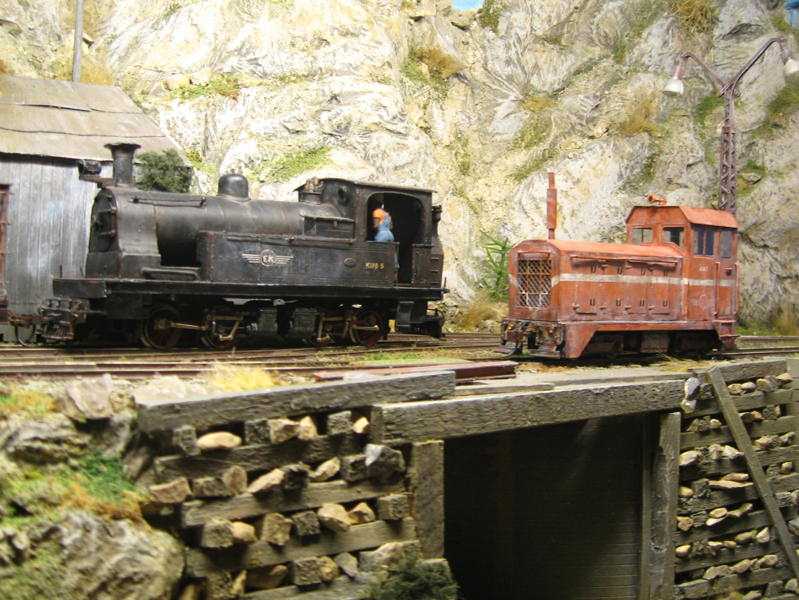
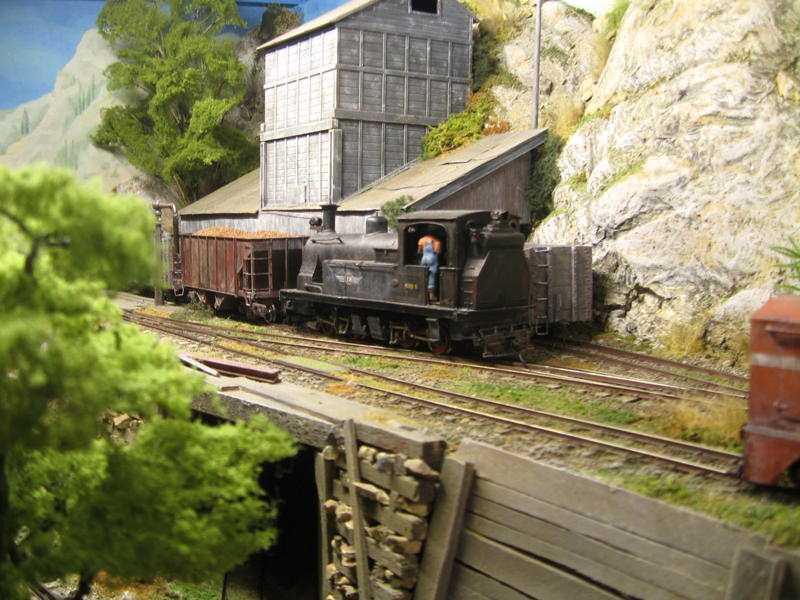
Around the turn of the century, an unnamed investor with his works manager, George, opened a small lignite mine on the south coast of Crete. However, this was to end in disaster as chronicled in the novel Zorba the Greek by Nikos Kazantzakis. Others were to take up the challenge.
Meanwhile between various Balkan wars and the start of the First World War, the British engineered to take over the administration of the island, and what did they do when they moved in anywhere? - they built a railway! In this case to the gauge of 2'6'', it borrowed heavily from the existing railways in Cyprus and Malta. The initial main line along the north coast was soon extended south from Iraklion to tap the rich agricultural lands of the interior and the mineral resources of Mount Ida. An extension further south through the Kofinas Range provided a route to coastal shipping and was incidentally to connect to a local lignite mine, still known as Zorbas. This required heavy engineering works including a zig-zag formation down to the coast itself.
All this, of course, only exists in a parallel universe, but it gives an excuse for a freelance On30 layout with both british and continental practice and later greek influence.
Locomotives both steam and diesel are an eclectic mix of kit and adapted bodies [Bachmann, A1 Models, the scrap box] on Hornby, Bachmann, Fleischmann and american chassis. Rolling stock is adapted Bachmann, Magic Train and Port Wynnstay castings. Control is still analogue but plans are afoot to convert to DCC when we have the courage! A Greek Z Class tank engine and a Mitsubishi diesel [for A1 Models] are on the way.
Thanks to A1 Models, Greenscene, Modelex,Port Wynnstay, Contikits, Monk Bar Models of York and the still loyal crew – John Lundie, Alan Robinson and Tim Hills.
We are here to answer your questions and take the flak, so please don't hesitate to interrupt our reverie.


https://mail.narrowgaugenorth.org.uk/index.php/traders/previous-years/85-public-news/exhibitors-previous?start=210#sigProId430963f9fa
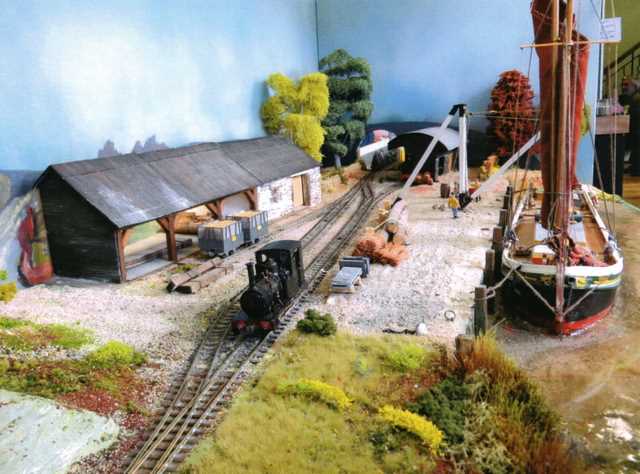
Τom's Wharf
Historical Background
Like other colleagues my interest in model railways has always been there, however once reached the magic age of 60 my body told me that after some 400,000 miles sailing, it was time to become a landlubber. To that end I joined the Falmouth Model Railway Club where there was a cadre of excellent modellers.
Toms Wharf was constructed as a response to the 5.5mm Association 2011 Challenge that it won. The objective I set myself was to demonstrate modelling of high quality within a small diorama This scene is typical of that to be found in the Thames Estuary or in Essex's coast and rivers.
Methodology
Before starting a project I tend to assess what resources are available. The previous winter I had completed a Billing Model kit of “Will' a Thames Sailing Barge from 1925-1985 (others details indicate it's a 280 ton barque built for F.T.Everard & Sons of Great Yarmouth). This was purchased very reasonably at Beaulieu Boat Jumble. The only problem was that of mounting it on a flat board. As it was built as a full hulled model I was reluctant to either cut a hole in the plywood base or reduce the depth of the hull. The solution was to have the single board split so as to allow the quayside and water element to be made separately as resin and various other heavy materials were to be used. Further it meant that either board once structurally stable could be worked on, on a small table, or in a limited space. So what materials were used and why?
Fortunately a technical career in the Royal Air Force and latterly as a Design Technology teacher has enabled me to use a large variety of materials. I chose now to use the best grade birch plywood, marine plywood, and kiln dried solid soft and hard woods. Aluminium 'L' section is another favourite. Taking a leaf out of lan Rices publications I wanted to try a bow fronted presentation as this had proved interesting on the clubs Helford Gweek Ouay layout. To this end a 6mm birch ply base was cut. The two joining faces, that of the rectangular track board and the quayside board were cut identically (12mm marine ply) and brass bushed joined together using a column drill and clamps. 8mm captive nuts were fitted to quayside board that was then joined (screwed & glued) to its 6mm base. Once dry a West Systems silica fillet was applied. A 12mm square wooden batten was then attached longitudinally thus providing a good base for the plaster preformed quayside walls to be securely fastened with PVA glue. Mooring post slots were filed at appropriate intervals along the Dutch styled stone crafted wall. It was then given a thin coat of mid grey. The mooring posts were stained on three sides, then fitted and together with "Will' all were securely glued in situ. The following day the 30mm edging was cut, pinned, glued and clamped to the edge of the 6mm base.
Water features and vegetation have always interested me and on this model I had a depth of water to play with. As I had the best part of a gallon of casting resin I chose to use this. First painted the creek bottom and added sand and other granule mixes pressing them well down. Naturally with ‘Will' in place the area was greatly reduced and bleedings from the vessel proved interesting. The first layer of resin was then applied and the water vegitation added (reeds etc.). This part of the model was then left to dry for 72hrs. Whilst the resin was tacky some floating items were then placed in position. Finally a major pour of resin was enacted until it overflowed the edging. The slight surplus on the edging acts as a sealing agent for the woodwork.
Turnouts are hand built as is some of the track, the remainder being standard Peco code 75 with the sleepers sanded down. The turnouts are electrically operated by point motors with a switch, and controlled with a standard Gaugemaster PCU2 unit. Track control is by a COMBI. At a later date the turnout micro switches will operate signals where appropriate.
The next structure to be built from scratch using square section brass tubing was the crane. This at present has a manual operation as all the pulley's work, but in the future the intention is to have MERG panel controlled servo motors working the crane functions. A traditional timber yard with its adjoining administrative building was scratch built and the general wharf warehouse facility is a bashed and modified old Wills timber shed model.
Rolling Stock is a mixture of second-hand bits and pieces from the 5.5mm Association and 009 Society. More precisely the loco body was hand built in brass onto a Zeuke Schmalspurbahn TT chassis and due to its weight runs very well indeed. Roy Schofield's ‘Welsh Pony' is featured in some of the images as the author has one these under construction. The mineral and slate wagons together with the carriages are those supplied by Malcolm Savage as are most of the locomotives. The remaining stock is modified and adjusted 14mm NG second-hand equipment.
In 2015 this layout was retrieved from the 5.5 Association and enlarged to 2metres with a fiddle yard and run around loop. The layout is continually being update and electronic modifications are on going!!
Tom Snook January 2016
https://mail.narrowgaugenorth.org.uk/index.php/traders/previous-years/85-public-news/exhibitors-previous?start=210#sigProId57ce2ad328