
Exhibitors : Previous
High Peak Tramway
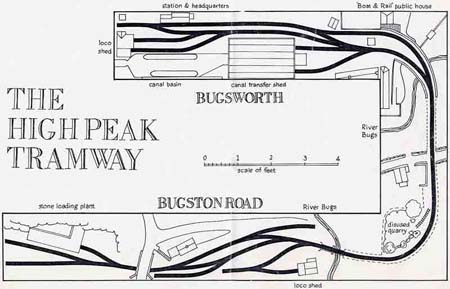
An O16.5 layout presented by the Hazel Grove & District Model Railway Society
Scale 7mm/1ft
Gauge 16.5mm
Size 13.25' x 8'
https://mail.narrowgaugenorth.org.uk/index.php/traders/previous-years/85-public-news/exhibitors-previous?start=90#sigProId2e3ebc6d9a
High Stamley
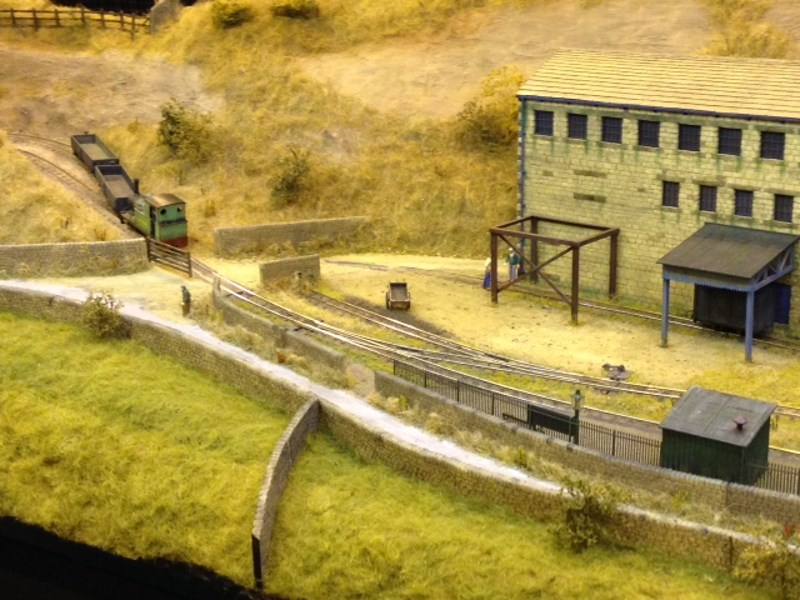
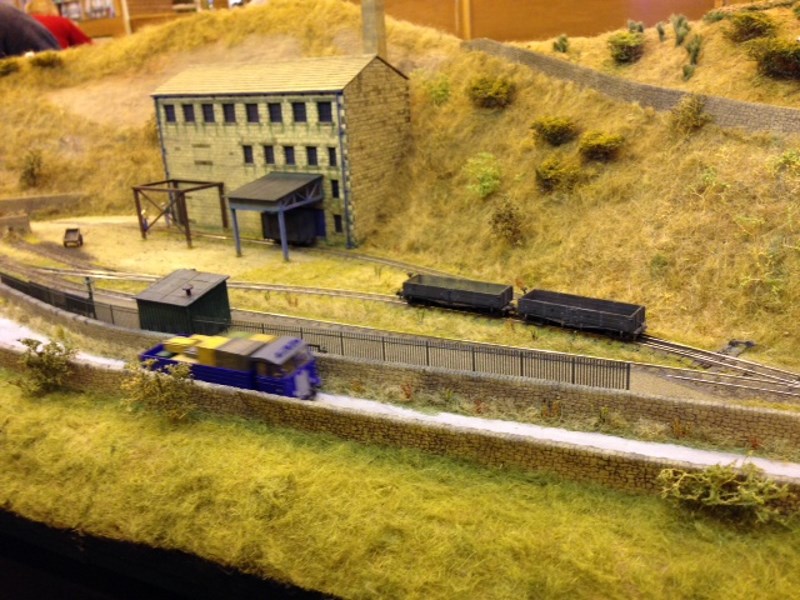
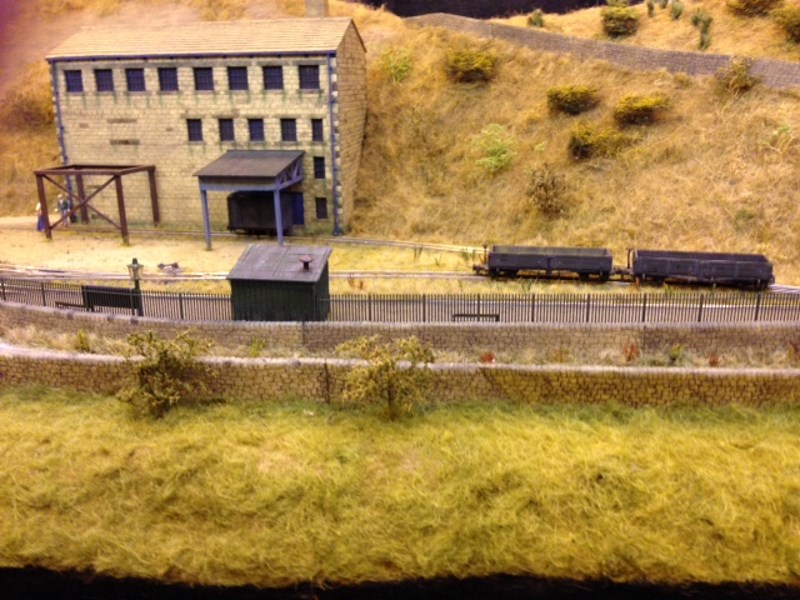
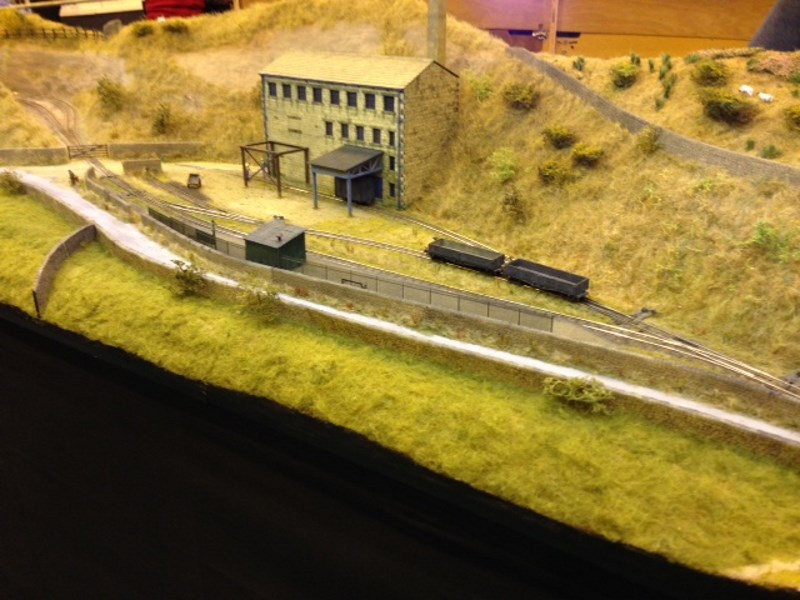
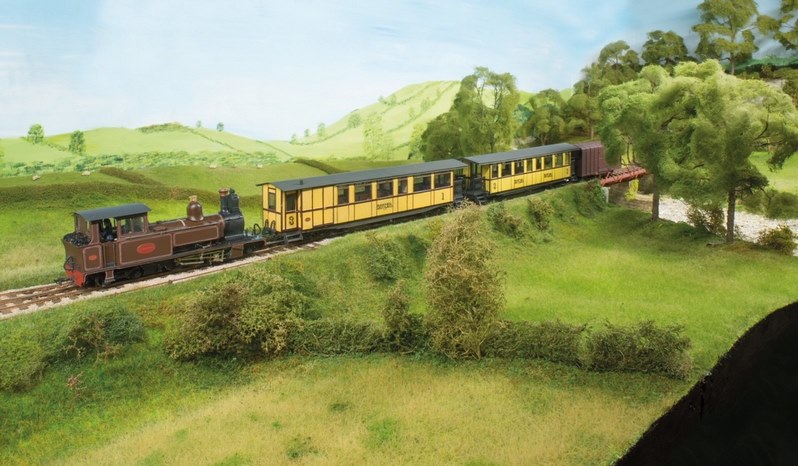
It had long been known that a good granite outcrop existed in the hills above Stamley, but with no proper transport it could only be worked in a small way for local use. The coming of the Roth Valley Tramway’s Ramton extension changed this and a short branch line was soon put in from Stamley station. Great things were expected, but with the First World War draining off the quarrymen, then the great depression, somehow the quarry never really seemed to get going.
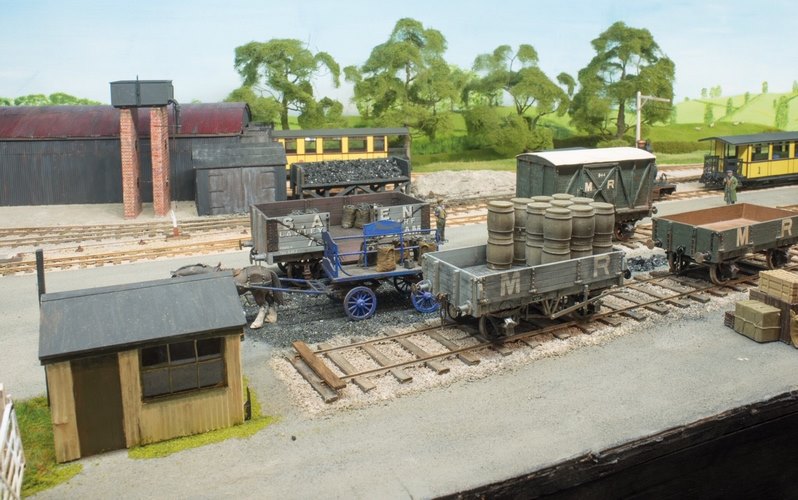
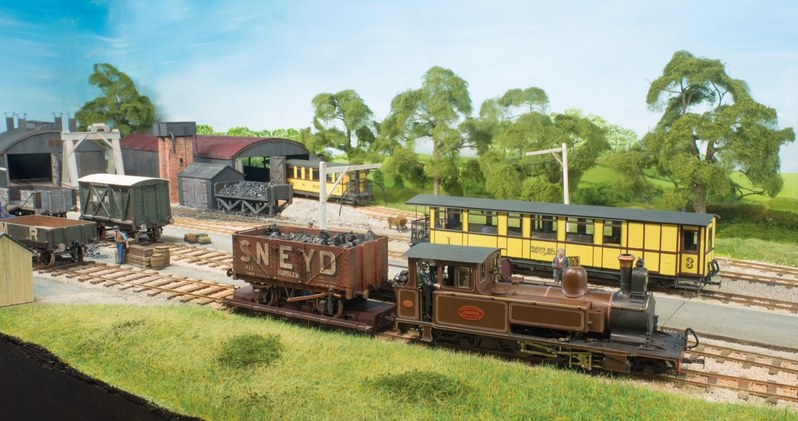
By the period of the model, around 1935, only small amounts of road stone and paving stones are being produced. Short trains, often mixed, bring up the empty wagons and remove loaded ones, with the odd van or two for the mill behind the station.
Buses now run right up to High Stamley Village, about half a mile further along the valley, so few passengers bother with the train. Lorries too can be seen in the valley; it looks like time is almost up for this little branch line. It will carry on for now, so you can watch the odd wagons going to and fro up the steep incline to the quarry, whilst small trains continue up and down the valley to the main line. Don’t leave it too long – soon it will be silent as the quarry company has ordered a lorry!
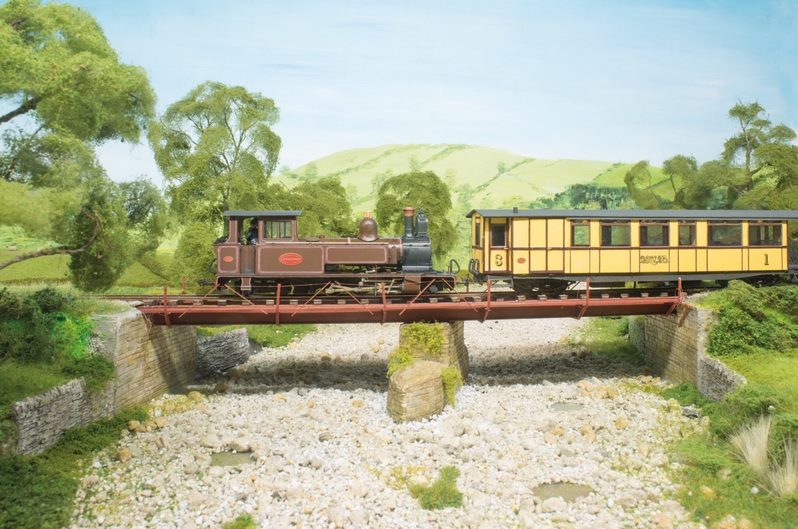
When the line’s own Peckett 0-6-0ST is unavailable, trains are worked by locos belonging to the RVT, No.2 an ancient Hudswell Clark 0-6-0T or No. 8, a Hunslet 0-4-2T are the usual visitors. A bigger Hunslet 0-6-2T No.12 appears on occasions.
The Quarry Company usually uses a Kerr-Stuart 0-6-0T. An elderly Bagnall 2-4-0T sometimes takes a turn struggling up the bank and almost sliding back down with full wagons.
The only stock owned by the line is an ancient six wheeled coach and a small brake van. All other stock belongs to the RVT and has been seen on the other sections of the RVT previously exhibited.
The layout will also be appearing at the following shows :-
| York | York Model Railway Show | 19-21/02/14 |
-
 High Stamley
-
High Stamley
High Stamley
-
High Stamley
High Stamley
-
High Stamley
High Stamley
https://mail.narrowgaugenorth.org.uk/index.php/traders/previous-years/85-public-news/exhibitors-previous?start=90#sigProIde900b246d9
Hirstwood Lock No.19
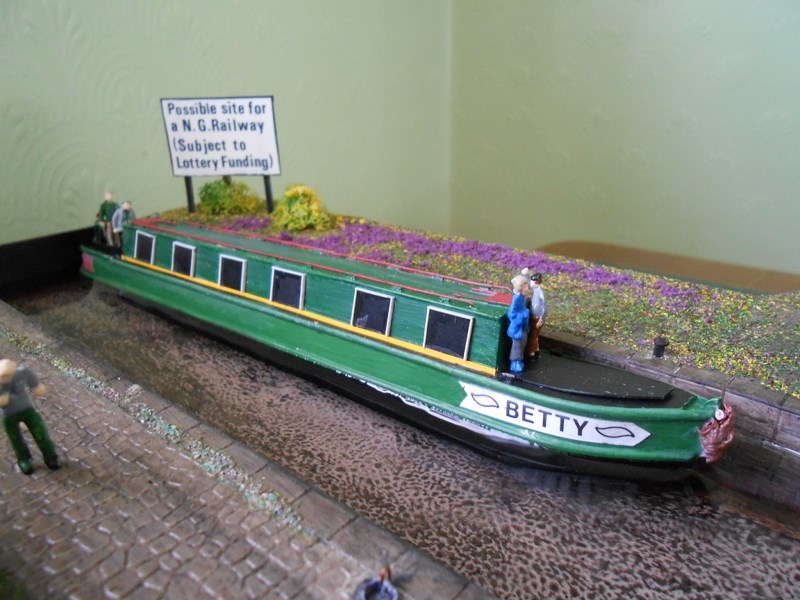
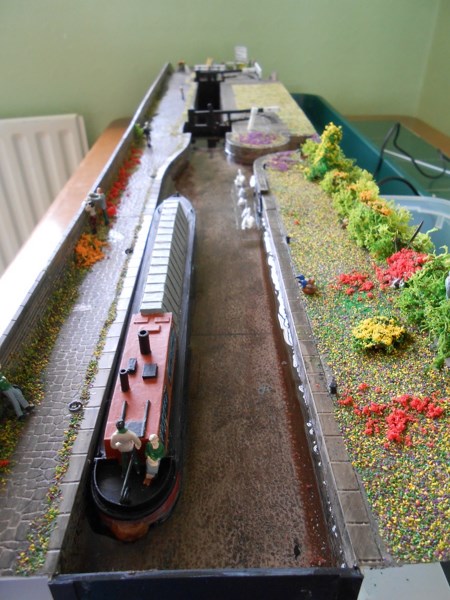
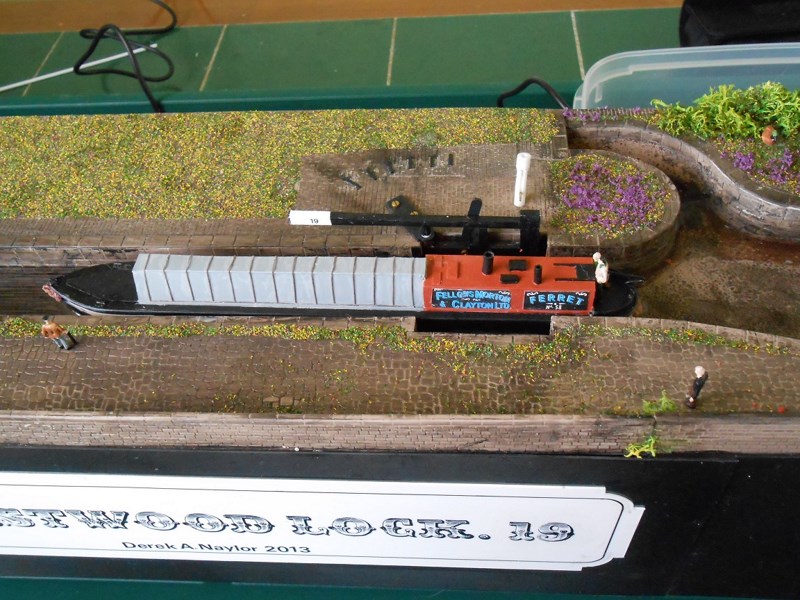
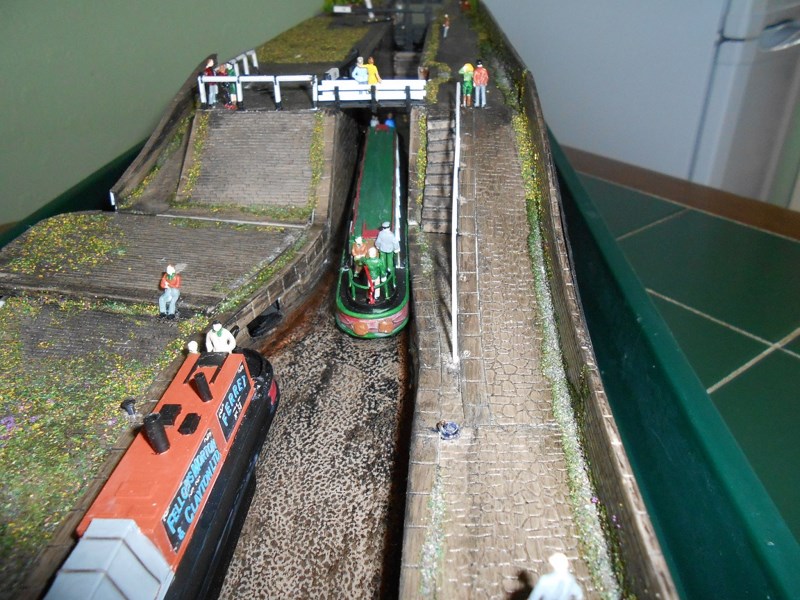
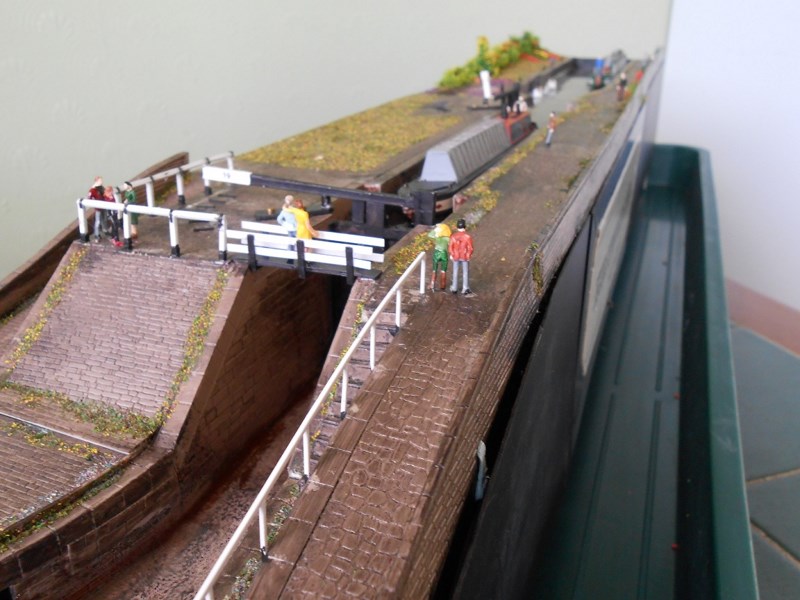
This is the second real water model I have made. The first was a Cornish style harbour in which the tide ebbed and flowed. Pretty simple. The lock proved.more of a challenge. . In the main is is constructed from plasticard. It is a freelance model of a narrow canal. I had looked at a broad canal but the narrow canal was simpler in so much as I could get away with single gates at each end of the lock. It's about the largest size I felt I could make a portable model. The scale is 1/96th (1/8 inch to the foot). The three narrow boats are also scratch built. They are to small, for me anyway, to fit motors which would also entail radio control. Instead they are propelled by a "twizzle" stick.
Questions are welcome.
-
Hirstwood Lock No.19
Hirstwood Lock No.19
-
Hirstwood Lock No.19
Hirstwood Lock No.19
-
Hirstwood Lock No.19
Hirstwood Lock No.19
-
Hirstwood Lock No.19
Hirstwood Lock No.19
-
Hirstwood Lock No.19
Hirstwood Lock No.19
https://mail.narrowgaugenorth.org.uk/index.php/traders/previous-years/85-public-news/exhibitors-previous?start=90#sigProIdb2e96295d5
Holegn Bridge
| By | Mark Croucher |
| Scale | 4mm |
| Gauge | 9mm |
| Size | 6' x 2' |
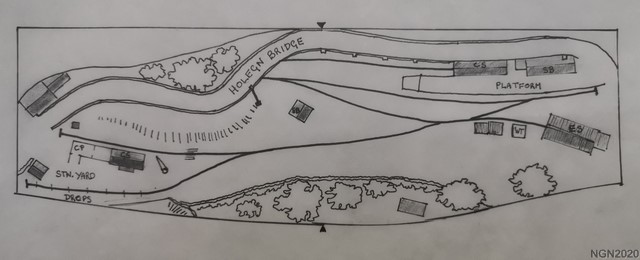
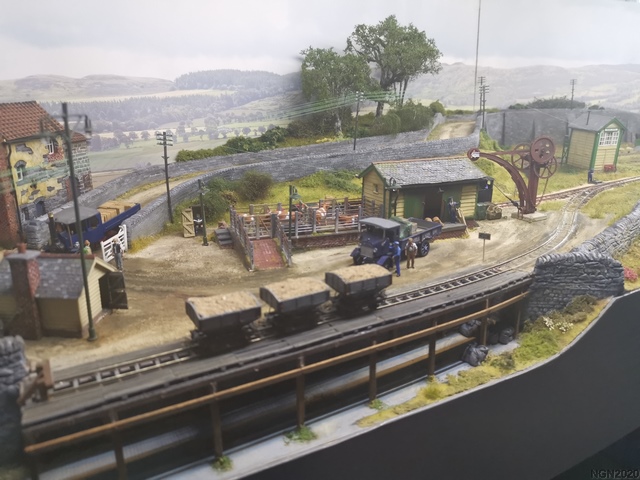
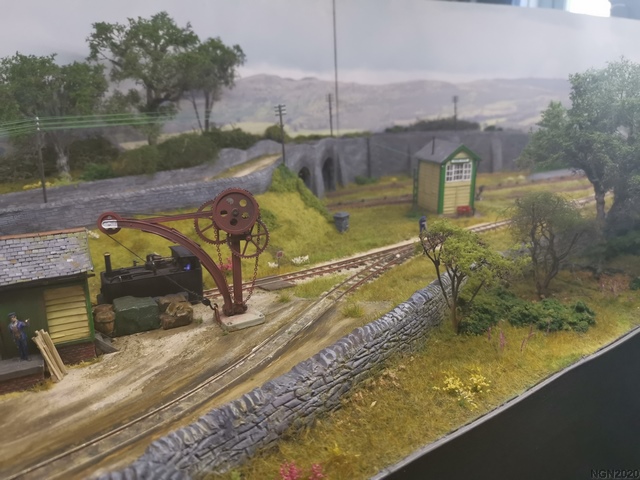
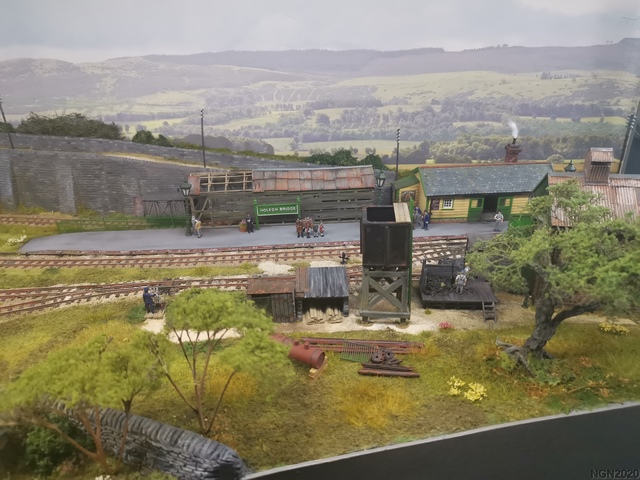
This independent narrow gauge railway evolved despite a lack of capital and the ups and downs of the mining and extraction industries.
Given a new lease of life by the demands of the Great War the railway subsequently suffered a slump in the post war depression before new investors set about rebuilding the railway.A last roll of the dice for the railway.
Taking advantage of Army surplus and the second hand market the railway was relaunched with diversified interests in the transportation of dry goods agricultural products and people.
-
Holegn Bridge
Holegn Bridge
-
Holegn Bridge
Holegn Bridge
-
Holegn Bridge
Holegn Bridge
-
Holegn Bridge
Holegn Bridge
https://mail.narrowgaugenorth.org.uk/index.php/traders/previous-years/85-public-news/exhibitors-previous?start=90#sigProId5f88413758
Hulme End
| By | Dr G Alan Gee & Halifax Model Railway Club |
| Scale | 4mm/ft |
| Gauge | 9mm |
| Size | 11' x 2'3" |
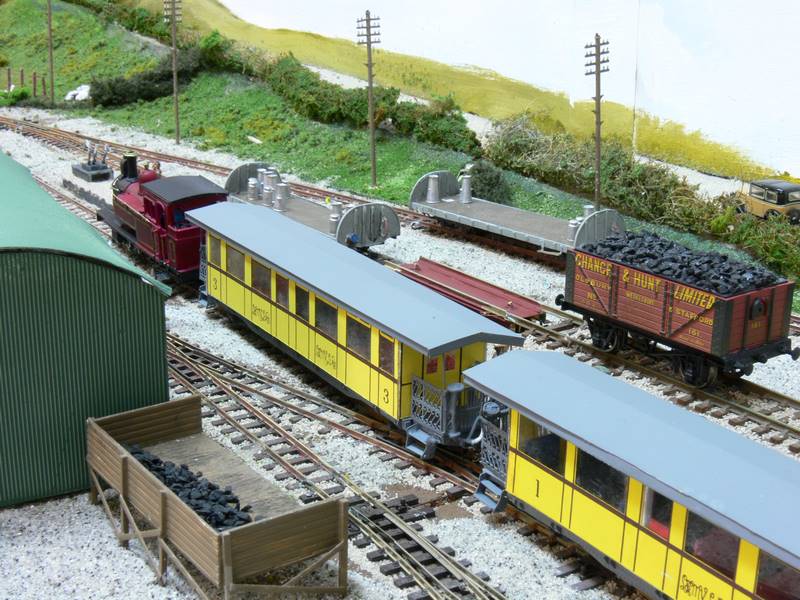
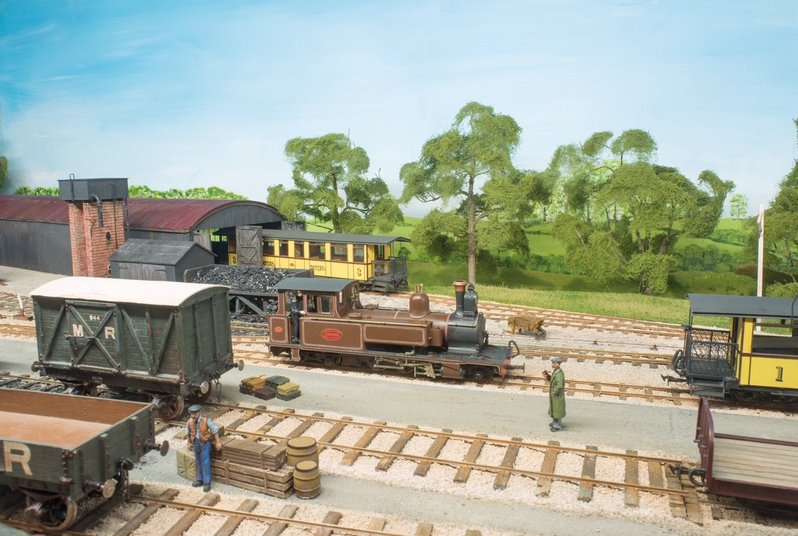
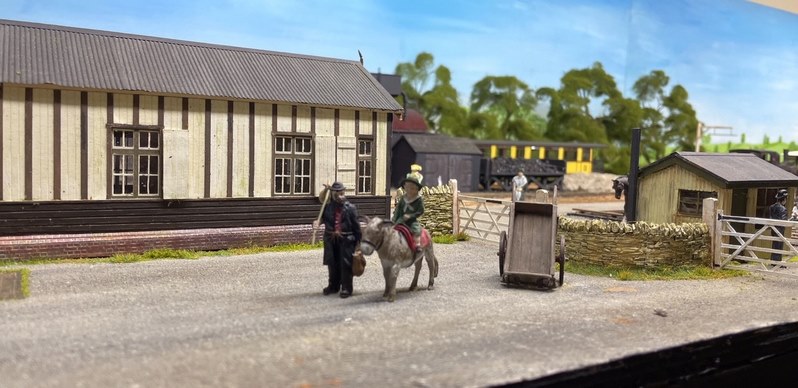
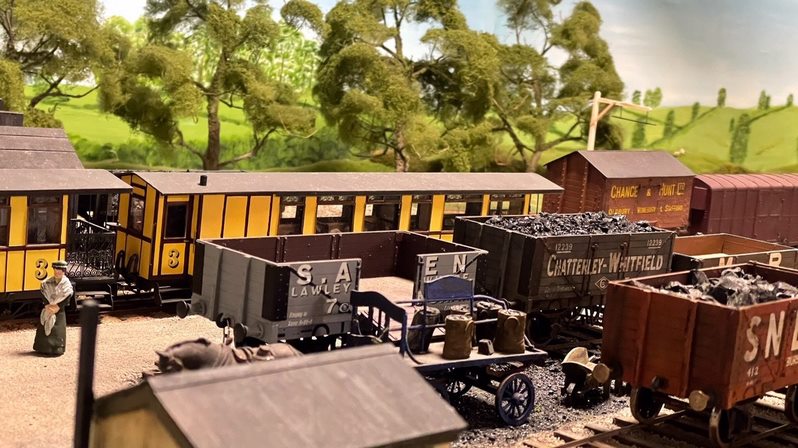
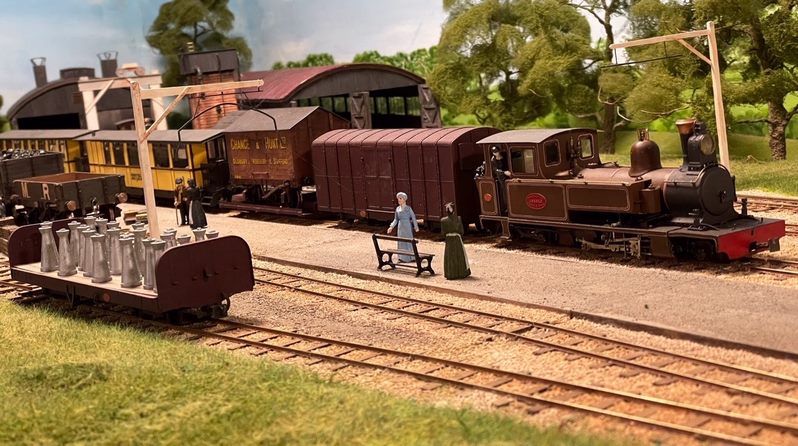
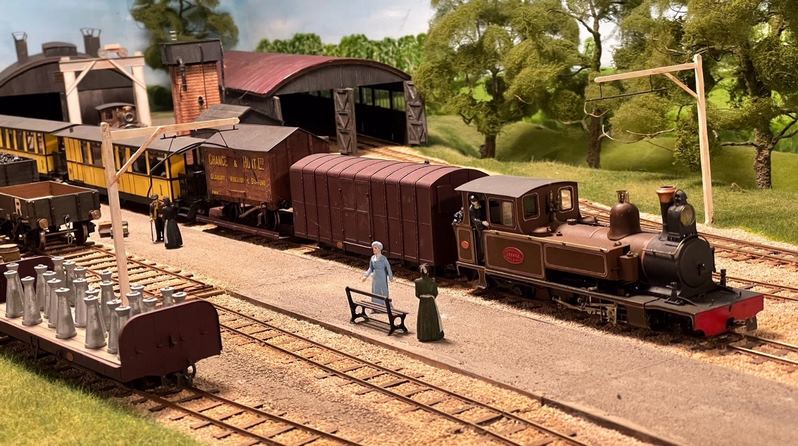
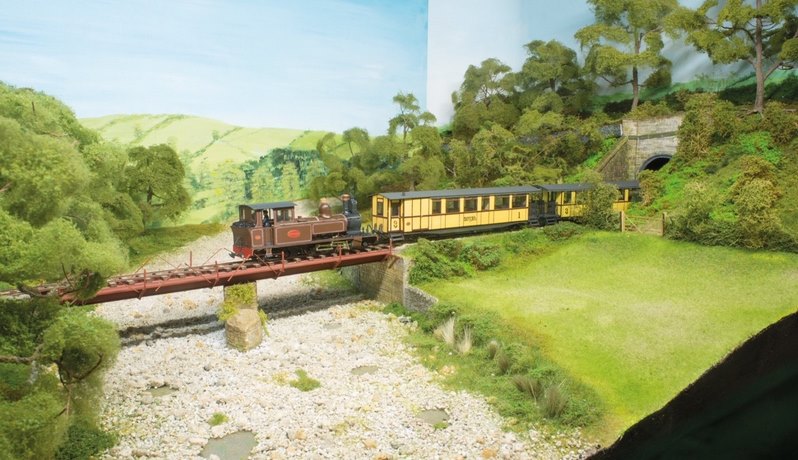
The Leek and Manifold Valley Light Railway was a 2ft 6inch narrow gauge railway completed in 1904 to run from the North Staffordshire Railway at Waterhouses up the beautiful River Manifold Valley to the small village of Hulme End. Hulme End was never intended to be the final terminus of the line which would be extended from there to the town of Buxton. Financial constraints however meant that the Buxton extension although surveyed was never built and Hulme End became the permanent terminus of the line.
We have modelled Hulme End exactly as it was prior to the closure of the railway in 1934 except that we have added the proposed Buxton extension to our model converting Hulme End into a through station instead of a terminus. The track plan is correct, and the buildings have been made from actual measurements of the station building and rebuilt loco shed which still remain at Hulme End.
On the model we have also tried to feature the standard gauge wagon transporter trucks which were a unique feature of the Leek and Manifold Valley Light Railway, one of the many screw bridges over the Manifold River , and the entrance to Swainley tunnel.
The original station buildings are still standing at Hulme End and today are used as a toilet block and a small museum. The rebuilt engine shed is now a cafe and the old track bed to Waterhouses is now a walking and cycle track. Perhaps after seeing our model of Hulme End you may be tempted to visit the station site and the Manifold Valley.
-
Hulme End
Hulme End
-
Hulme End
Hulme End
-
Hulme End
Hulme End
-
Hulme End
Hulme End
-
Hulme End
Hulme End
-
Hulme End
Hulme End
-
Hulme End
Hulme End
-
Hulme End
Hulme End
-
Hulme End
Hulme End
-
Hulme End
Hulme End
-
Hulme End
Hulme End
-
-
-


https://mail.narrowgaugenorth.org.uk/index.php/traders/previous-years/85-public-news/exhibitors-previous?start=90#sigProId7ff7cd6ba8
Hulme End in 017.5
| By | Paul Holmes |
| Scale | 7mm |
| Gauge | 17.5mm |
| Size | 5.25m x 1m |
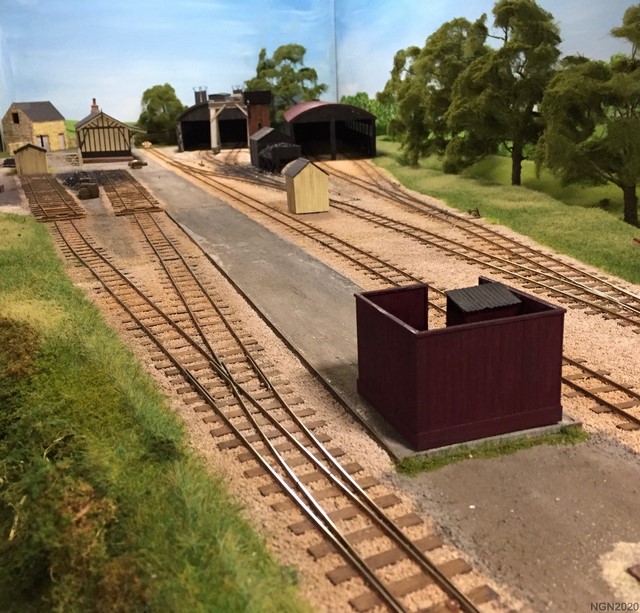
The Leek and Manifold Valley Light Railway was opened in 1904, a 2’6” gauge line from the Staffordshire villages of Waterhouses to Hulme End. At Waterhouses it formed a junction with the standard gauge North Staffs Railway, who operated the narrow gauge line from the beginning. The Hulme End terminus was the centre of operations, housing the engine and carriage sheds with facilities for maintenance of stock.
The model is built to 7mm scale and is set shortly after opening, in the first decade of the twentieth century. I have tried to make it as accurately as I could; this includes the adoption of correct 17.5mm gauge, not the usual 0-16.5. The trackwork is all hand built with light weight flat bottom rail spiked to timber sleepers and the buildings are scratchbuilt from drawings in Bob Grattan’s definitive history of the line. I have tried hard to represent the rural nature of the station, set in the rolling hills of the Staffordshire moorlands.
The line only possessed two locomotives, four carriages and eight bogie wagons and these have all been built from available kits. The locos are Slaters and the stock from Dorset Kits; all finished in the early livery – light chocolate brown for the locos and primrose yellow for the passenger stock. The engineer to the line was one Everard Calthrop, a great proponent of narrow gauge lines for the British Empire and the line had a strangely colonial appearance as you can see.
The line ran with a one engine in steam principal, negating the requirement for extensive signalling, but for the exhibition we will fire them both up together! All the stock was vacuum fitted and short mixed trains were very much the order of the day. It was one of very few British NG lines to feature transporter wagons which were used to convey standard gauge wagons from the SG interface at Waterhouses up the line – each station had a short length of SG track at the end of the siding and the SG wagons were pushed by hand on and off the transporters where they could be unloaded at leisure. Hulme End had the luxury of two such sidings.
The model is DCC operated using Lenz control with Zimo decoders in the stock. The locos have sound, smoke, firebox glow and working Walschearts reversing gear.
-
Hulme End
Hulme End
-
Hulme End
Hulme End
-
Hulme End
Hulme End
-
Hulme End
Hulme End
-
Hulme End
Hulme End
-
Hulme End
Hulme End
-
Hulme End
Hulme End
-
Hulme End
Hulme End
-
Hulme End
Hulme End
-
Hulme End
Hulme End
-
Hulme End
Hulme End
-
-
-
https://mail.narrowgaugenorth.org.uk/index.php/traders/previous-years/85-public-news/exhibitors-previous?start=90#sigProId7ff7cd6ba8
Hunslet Engine Works
A layout by Andrew Ross
Scale 7mm/1ft
Gauge Various
Size 6’ x 1’
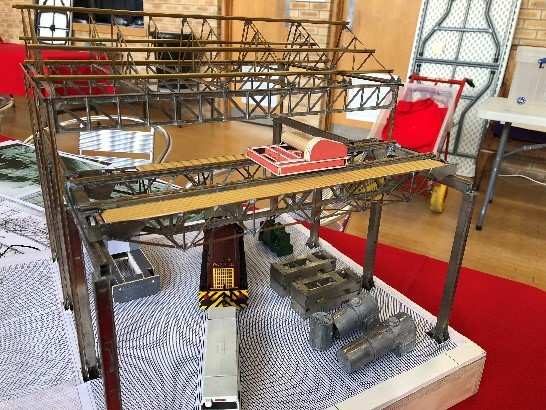
Hunslet Engine works in O gauge. After working for many years at Hunslet Andrew is building a working Diorama of the Erecting shop and test track of the Hunslet Engine Works. A 2mm mock shows what the aim is and includes the interior details to be included in the final Layout. This will include working cranes and the multi gauge test track. The locomotives on display are all Hunslet and will take their place at some point in the works. Much of the structure is etched and the display shows the progress to date on a small section of the structure including the development work on the overhead crane.

https://mail.narrowgaugenorth.org.uk/index.php/traders/previous-years/85-public-news/exhibitors-previous?start=90#sigProId4a0bac8218