
A G scale narrow gauge layout by Steve Bennett
Scale 1:22.5
Gauge 16.5mm
Size G scale on 16.5mm gauge track, equates to a prototype gauge of 15”.
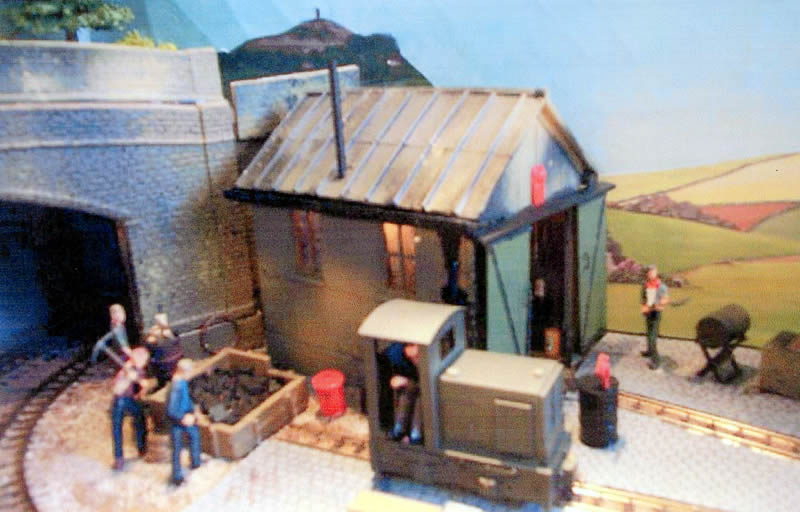
This layout suitable for a coffee table or similar shows that large scale need not mean large space. Items featured on this layout are available from the Black Dog Mining Co.
A 7mm/1ft scale multi gauge layout by Howard Martin
Scale 7mm/1ft
Gauges 6.5mm;9mm;16.5mm
Size 4’ x 2’
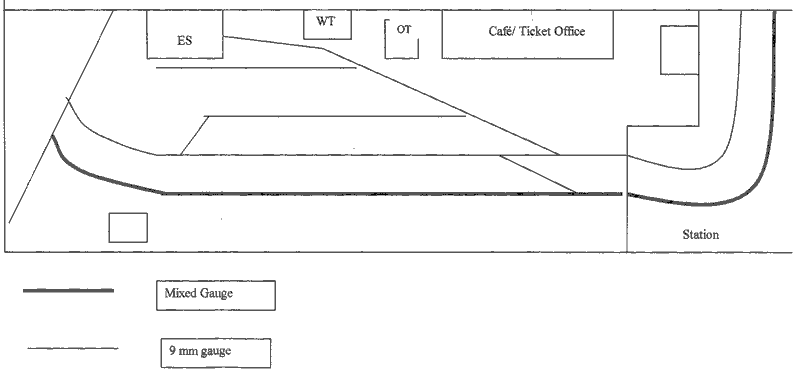
The TILLIG mixed gauge track allows the running of 16.5mm, 9mm and 6.5mm gauge rolling stock, and at a scale of 7mm/foot these equate to prototype gauges of 2’3”, 15” and 10.25”.
The purpose of the layout is to demonstrate the Avalon Line and Black Dog Mining Co range of 7mm scale narrow gauge kits; hence most of the stock is from these ranges. In addition there are a number of kits from the Wrightlines and Roy Link ranges and some scratchbuilt Z gauge items (mainly built by Chris Krupa).
The layout hopefully demonstrates that an interesting 7mm narrow gauge layout can be built in a 4’ x 2’ space, and that a number of different gauges can be used.
If you have any questions about the layout, the 7mm Narrow Gauge Association or 7mm narrow gauge modelling in general, please feel free to ask.
https://mail.narrowgaugenorth.org.uk/index.php/85-public-news/exhibitors-previous?start=176#sigProId0e41462d35
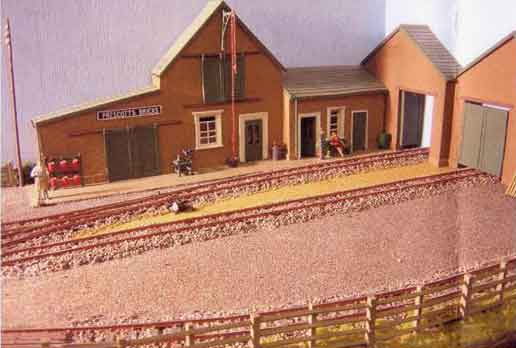
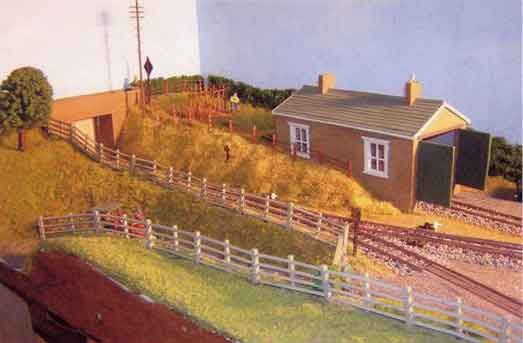
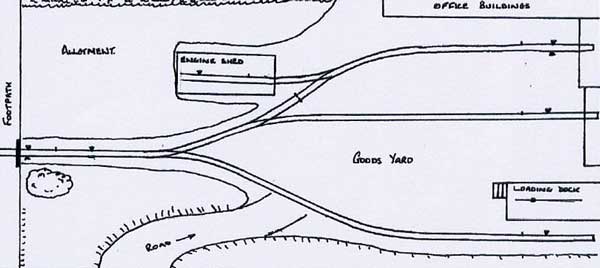
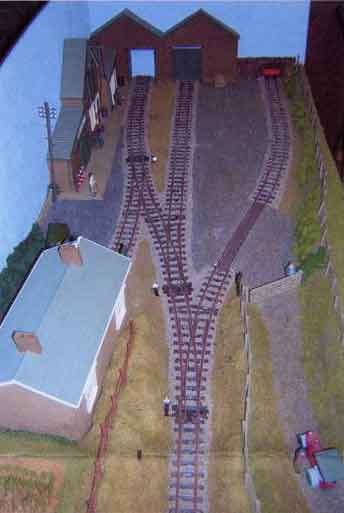
An O16.5 layout by Graham Bentley
Gauge 16.5mm
Size 4’ x 2’
https://mail.narrowgaugenorth.org.uk/index.php/85-public-news/exhibitors-previous?start=176#sigProIdc1ef486c37
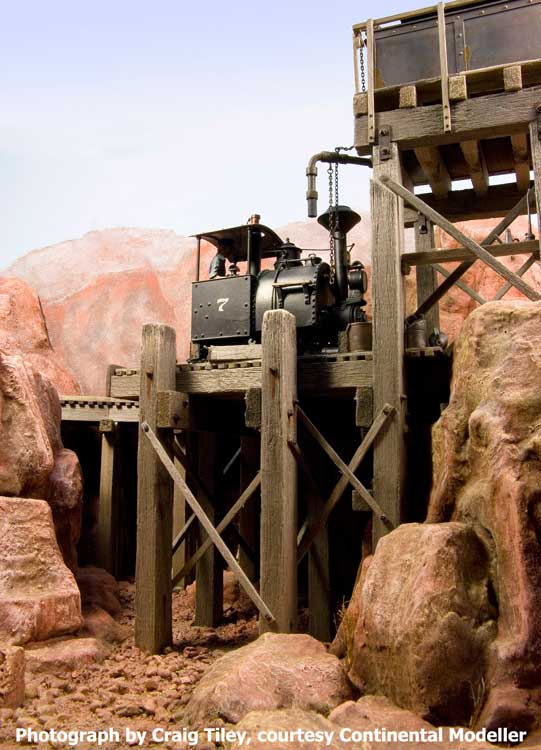
A 1:25 scale layout by
Gauge 16.5mm (representing 18” gauge)
Size 8’6” x 2’
Following the success of my previous 1:25 scale layout on 16.5mm track (''
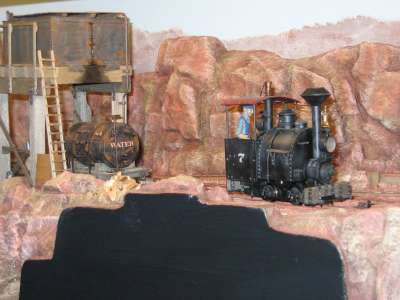
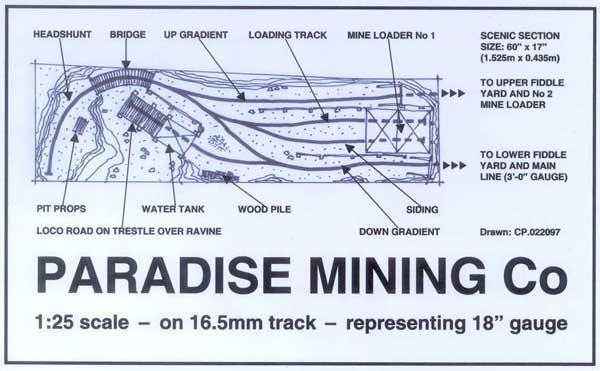
The stressed ply monocoque baseboard deliberately provides the opportunity for scenic and structure (bridge and trestle) modelling below as well as above the level of the railroad. Track is Peco and Fleischmann (the 10'' radius curve on the bridge deck). The two Porter locos (No 6 is the ''signature locomotive” for the project), vertical boiler loco No 9, and stock are scratch built in styrene and timber on Hornby chassis. The articulated steam loco (No 12) has an Athearn chassis. Extensive use has been made of distressed balsa wood for the modelling of structures.
The intent is to portray the activity at a reversing point in a mountainous setting, and in so doing it is hoped that the use of two locomotives for switching manoeuvres will be seen as appropriate rather than contrived. Within the scene is an ore loading bin, and another is imagined to be higher up the line. Gradients are presumed to be severe and therefore all trains are short (a maximum of three bogie cars) with the locomotive at the rear facing uphill in order to keep the firebox crown covered with water.
It being firmly believed that good design is essential for all aspects of a successful exhibition layout, particular attention has been paid to the arrangement, function, and ergonomics of the fiddle yard. This has been constructed on two levels, the lower yard includes a traverser, and with an ore car tippler so that operation is as much as possible ''hands off''.
Relevant published articles.
| 1 | Porter 0-4-0ST no 6 | Continental Modeller | Aug 2005 |
| 2 | Freelance ore cars | Continental Modeller | Aug 2007 |
| 3 | Continental Modeller | Jul 2008 | |
| 4 | Photo tour | Continental Modeller | Nov 2008 |
| 5 | Operation for Performance | Continental Modeller | Feb 2009 |

https://mail.narrowgaugenorth.org.uk/index.php/85-public-news/exhibitors-previous?start=176#sigProIdbbc16aabfc