
A 009 layout by Darryl Foxwell
Scale 4mm/1ft
Gauge 9mm
Size 8" x 8"
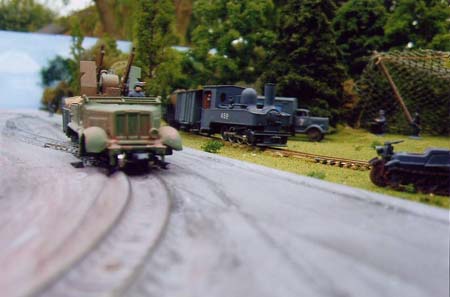
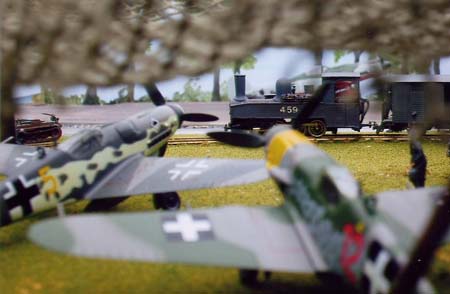
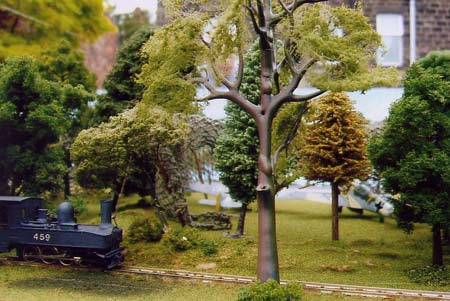
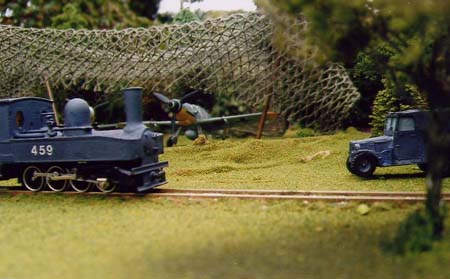
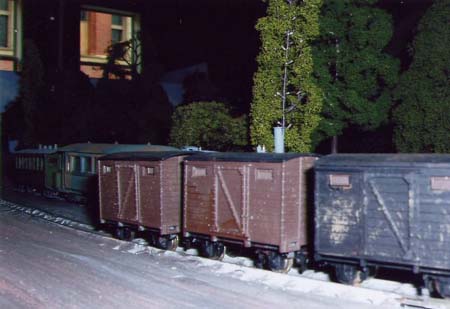
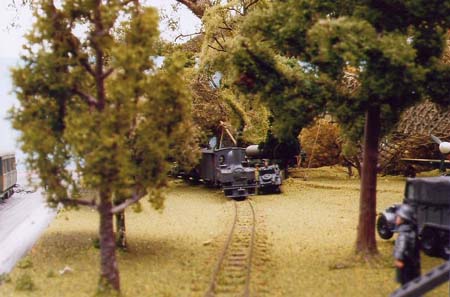
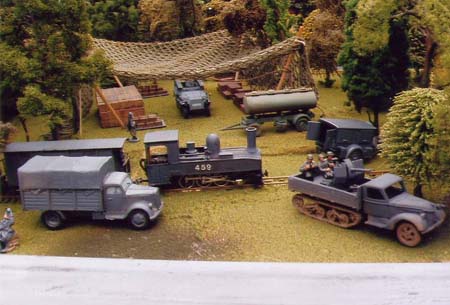
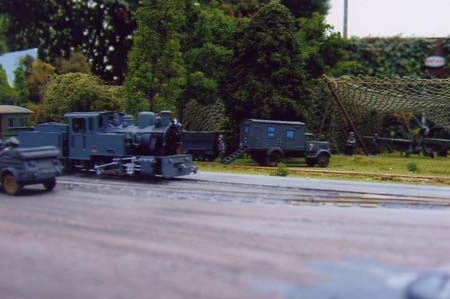
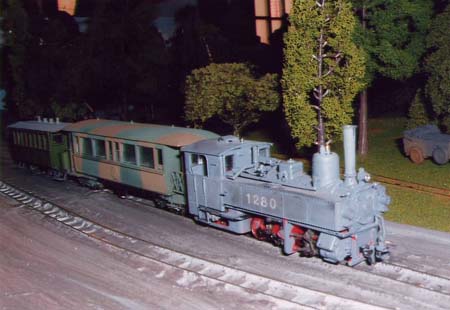
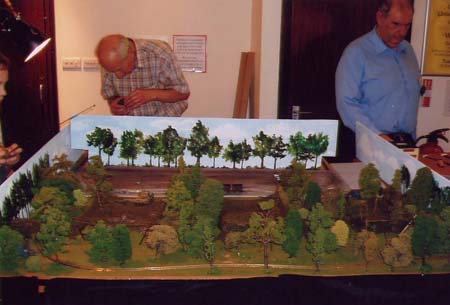
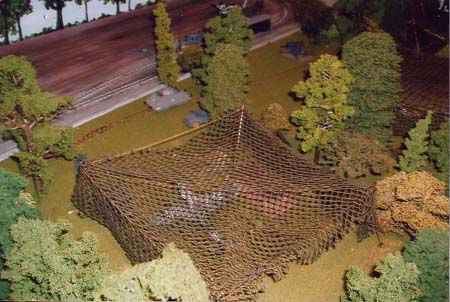
The layout depicts the use of camouflage in war, particularly hiding things from aircraft flying over the area. The scene could be set in Southern England prior to D-Day or Germany in the final months of the Second World War. Current exhibitions are showing the German scene where, with airfields being bombed by the Allies, aircraft were hidden in the local woods, and used the autobahns to take off and land. The area is served by a narrow gauge railway running through the woods, with another section built on the autobahn. A wide variety of diesels and steam locos can be seen as well as Tiger tanks moving into defensive positions. In this heavily wooded area three sections of camouflage netting can be seen covering fighter aircraft, with a variety of soft skinned vehicles dispersed among the trees.
-
 Title
Title
-
Title
Title
-
Title
Title
-
Title
Title
-
Title
Title
-
Title
Title
-
Title
Title
-
Title
Title
-
Title
Title
-
Title
Title
-
Title
Title
-
Title
Title
https://mail.narrowgaugenorth.org.uk/index.php/85-public-news/exhibitors-previous?start=192#sigProId71d547e9ec
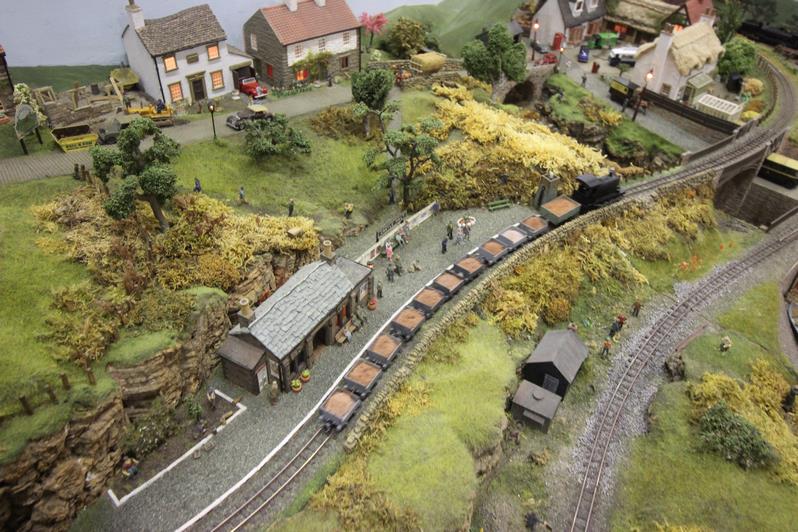
After six years success with the fictitious layout "Llandovnodd", we decided to model the next fictitious village up the coast called Avyn-a-llyin. The layout has Welsh origins, hence the name, although you will realise the is not Welsh, if you say it the English way. The grounds of the ruined castle on the hill now belong to the local golf club, who have constructed a very scenic golf course. The pier is of timber construction, with each upright individually screwed into place. Most of the buildings are scratch built in Linka and Plastikard. Two of the roofs are genuine hand cut Welsh slate, and three roofs are thatched with plumbers hemp in Pendon style. The sea is literally dozens of coats on non-drip varnish on a mixture of sand and ballast. The beach is real sand from our local sand quarry, and is about 20mm deep. There are over 200 figures on the layout, and in case you cannot find them, the nudists are at the back of the beach under the sea wall!The track is Peco crazy track with Seep electrics, and ballasted with a mix of granite, limestone and sand. Most of the stock is kit built with a few scratch built items. Avin-a-llyin was first exhibited in October 1989, and has since won numerous trophies. It also appeared in the Railway Modeller, February 1992.
We hope you enjoy looking at the layout, as much as we did building it.


https://mail.narrowgaugenorth.org.uk/index.php/85-public-news/exhibitors-previous?start=192#sigProId9908d202a6
An On30 layout by Ian Drummond
Scale 7mm/1ft
Gauge 16.5mm
Size 10' x 6'
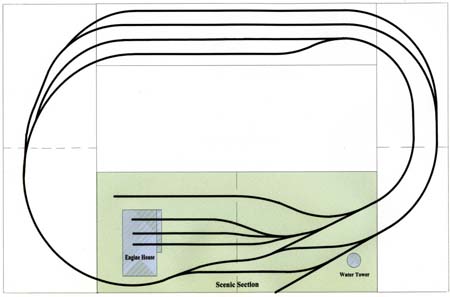
Blackhawk House was the Engine House (American term for engine shed) of the Gilpin Gold Tram, which served many of the mines of Gilpin County in Colorado , USA . This 2ft gauge line was constructed in several phases staring in 1887, and eventually the line was some twenty six miles long. It twisted and climbed all over Gilpin County with steep gradients, in places at least 1 in 20, and sharp curves, the tightest of which was reputed to have been 50ft radius on the main line. Sadly thought the line was relatively short lived, closing in 1917. The story of the line was related in the March/April 2006 edition of the magazine "Narrow Gauge World". The model supposes that in fact the line survived longer, being purchased by a large mining company, which brought in some additional motive power to supplement the line's original Shay geared locomotives. At the centre of the layout is Blackhawk House which was in fact a converted barn, and serves as the main engineering facility on the line. The main line climbs and curves round the Engine House on a series of wooden trestles. These were so close to the Engine House that when the line acquired larger locomotives, part of the roof of the barn had to be cut away to allow the engines to pass. To the front of the layout there is a line leading away to the warming house. In winter trains of gold ore were placed in the warming house overnight, in order to thaw out, the low temperatures often completely freezing the ore inside the hopper wagons. The line now operates a range of locomotives including Shays and Climax's, as well as a couple of early railtrucks. Operation of the layout is by a DCC system which allows for individual sound for each locomotive.
https://mail.narrowgaugenorth.org.uk/index.php/85-public-news/exhibitors-previous?start=192#sigProIdc3cd19af36
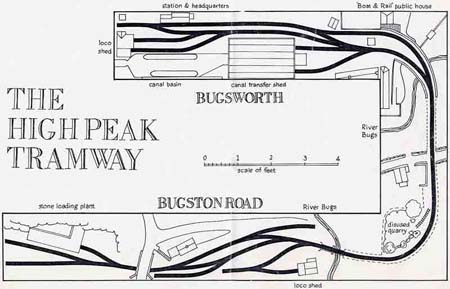
An O16.5 layout presented by the Hazel Grove & District Model Railway Society
Scale 7mm/1ft
Gauge 16.5mm
Size 13.25' x 8'
https://mail.narrowgaugenorth.org.uk/index.php/85-public-news/exhibitors-previous?start=192#sigProId2e3ebc6d9a