
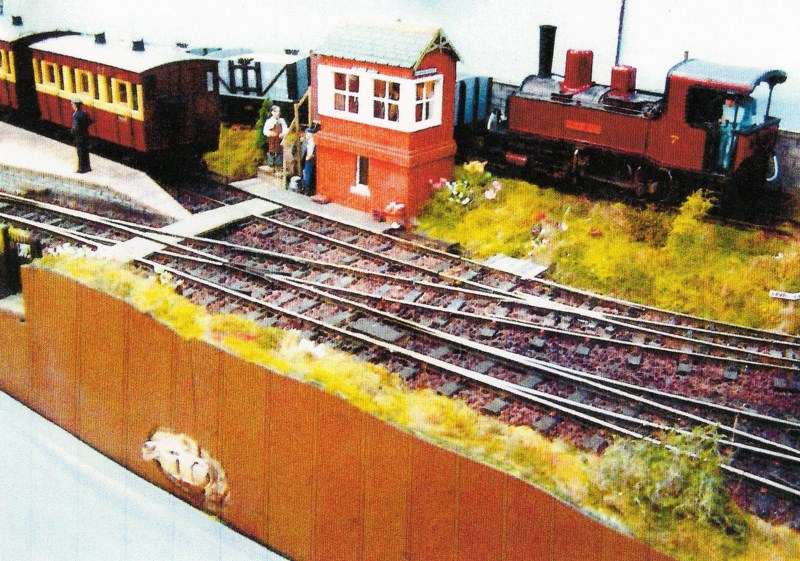
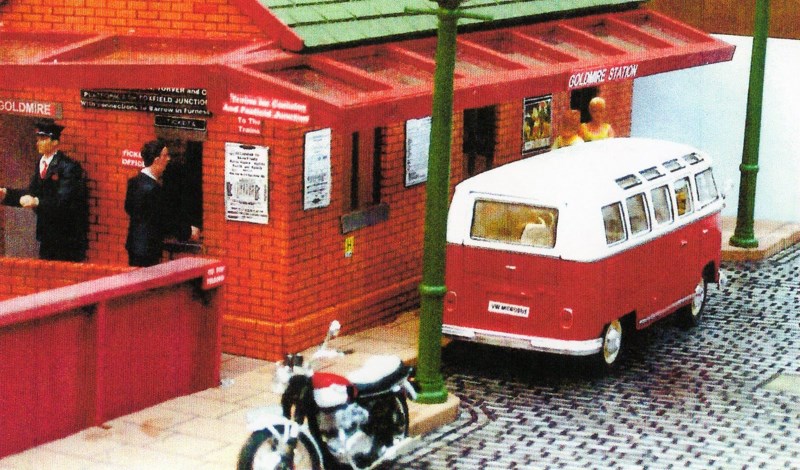
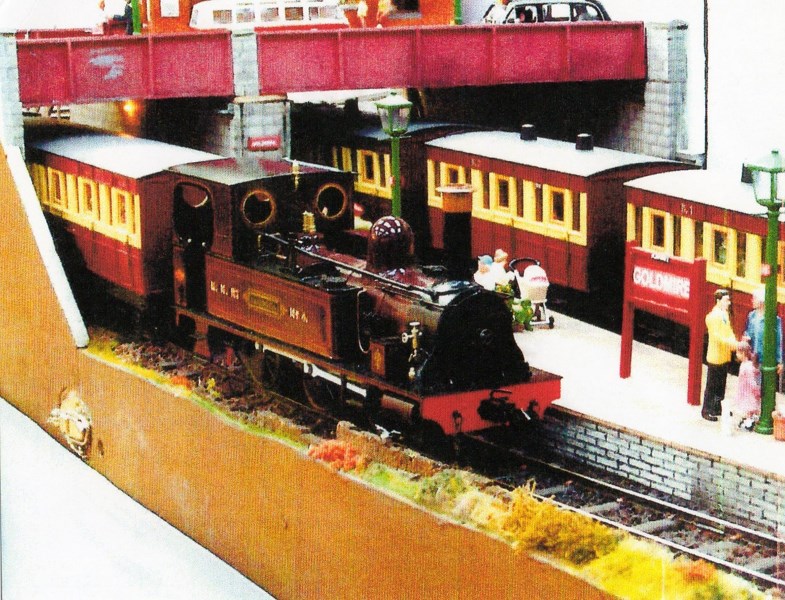
Goldmire is our second attempt at a G scale layout. We wanted a layout on which we could run longer tarins, with longer vehicles.
The setting is purely imaginary, and is based on the closed line from Foxfield Junction to Coniston in the English Lake District. This line was closed about 1960. We have assumed that in the 1980-1990 period the line was reopened as a narrow gauge line. Most of the stock to run the line would have had to be obtained second hand, from other narrow gauge lines, which suits the stock we already run. The line has assumed the nature of a living museum of local and national railway history.
Goldmire would have been close to Foxfield, and we have assumed it to be the headquarters of the line. Next to the station is the quarry, from which the layout gets its name, where granite goes to the standard gauge line at Foxfield.
Scenery and buildings are not as numerous as we usually build, as the narrow baseboards do not leave much room for scenery. Most of the buildings are of minimum size, as scale sized buildings would overwhelm the layout. Track work is mostly second hand PECO with some new points. Most of the stock is from the Accucraft range.
If you require any information about the stock or the layout please ask one of the operators.
-
 Goldmire Quarry
-
Goldmire Quarry
Goldmire Quarry
-
Goldmire Quarry
Goldmire Quarry
-
Goldmire Quarry
Goldmire Quarry
-
Goldmire Quarry
Goldmire Quarry


https://mail.narrowgaugenorth.org.uk/index.php/85-public-news/exhibitors-previous?start=76#sigProId345df53708
| By | Brian Dominic |
| Scale | 16mm/ft |
| Gauge | 32mm |
| Size | 4'3" x 2'8" |
There is a myth that to model in 16mm scale, you need a garden half the size of [insert your county name here] and a 4-figure budget to buy at least one steam loco.
You don't.
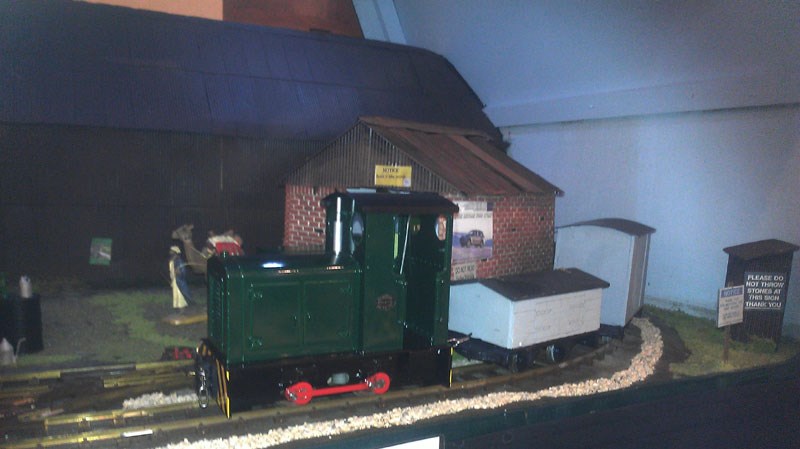
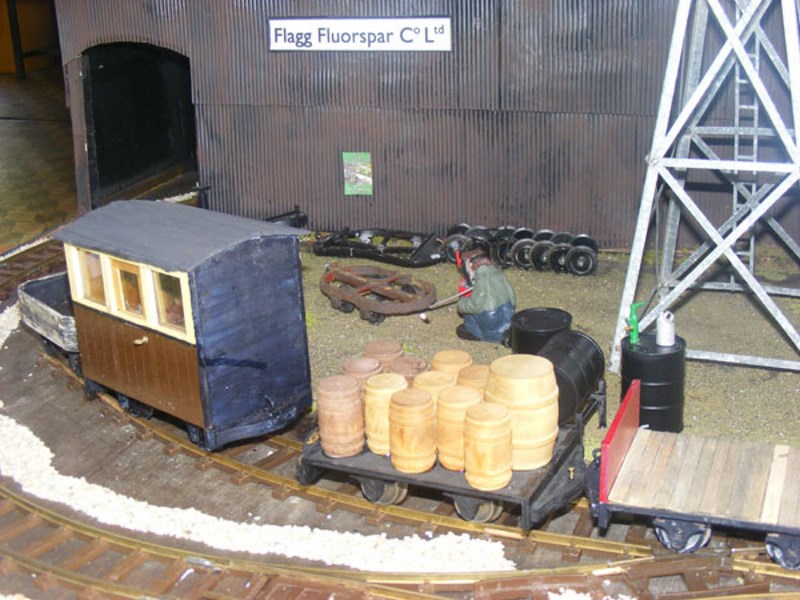
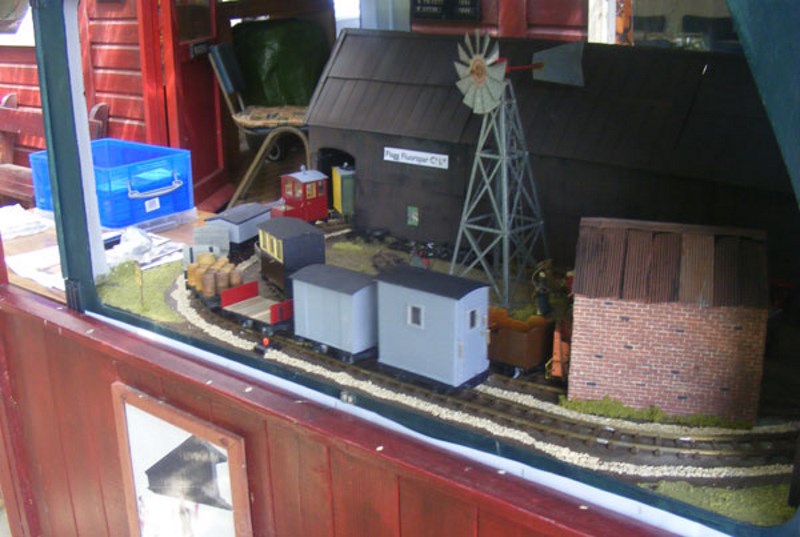
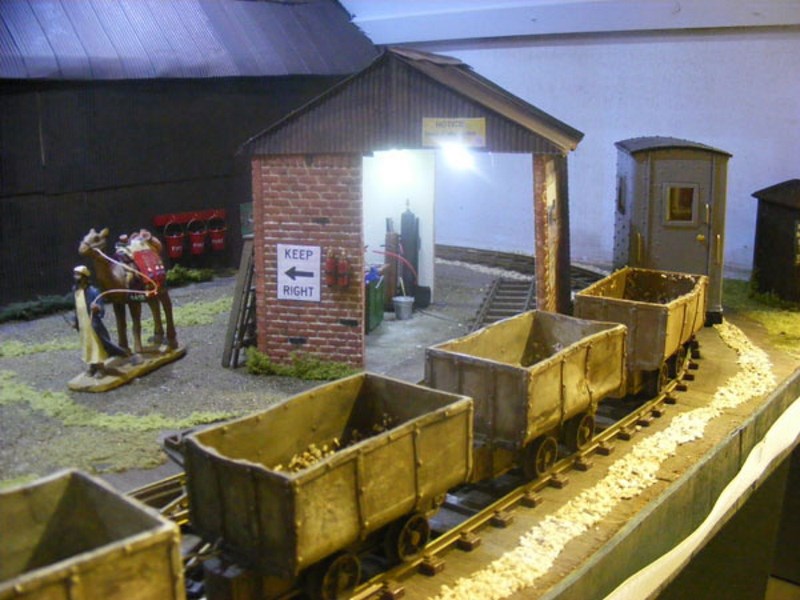
In Flagg Fluorspar's space of 4' 3" by 2' 8"there is an oval of Faller E-Train track (available on your favourite online auction site from sellers in Germany) on which is operating battery electric powered TRAINS that mostly cost less than £100 (the cost of a good 4mm scale loco).
The line was inspired by John Rogers's Pigsty Hill Brewery Tramway which appeared at the 16mm Association Convention at Stoneleigh in 2010. I thought the concept was excellent and worthy of a wider audience, but had problems with storage and keeping the layout dust free. Thus I evolved the concept of "a layout in a box" which (just) fits in the back of a small family hatchback, together with the stands it stands on, a chair for the operator, a mains lead (for the massive THREE WATTS of lighting) and boxes of stock.
The whole can go from "in the car" to "up & running" in around 15 minutes (assuming the car can be got into the venue) and breaking down is equally rapid. The motive power and stock is mainly from IP Engineering, though on occasions bigger locos and stock do appear (just to prove that they CAN get around the corners). The layout first appeared in an incomplete form at the Exeter Garden Railway Show in October 2012, but has now had a Loco Repair Shop, Windmill, welder and various other bits of “junk” added.
Scenic effects rely on standard 4mm scale methods, with added fluorspar from a mine in Derbyshire and details come from a number of suppliers. PLEASE NOTE THAT THIS LAYOUT WILL NOT GO THROUGH A STANDARD SIZE DOOR OR FIT UNDER A STANDARD SIZE CEILING!
A Little Background (fictional bits in italics)
Flagg is a small village in the White Peak area of Derbyshire – around 5 miles south of Buxton and a few miles away from the Monyash terminal of the (fictional) Mid –Derbyshire Light Railway. There was a Mineral Extension Line running from the head of steel at Monyash to the various fluorspar mines (which do still exist) on the plateau. Flagg is perhaps best known as the venue for the last point-to-point steeplechase races held over the stone walls of this part of the world - the races are on Easter Monday and the MDLR used to run trains up the Mineral Extension just for that one day.
Fluorspar is a halide mineral composed of calcium fluoride, CaF2
The mineral is used as a flux in iron smelting to decrease the viscosity of slags at a given temperature. This increase in fluidity is the result of the ionic nature of the mineral. The melting point of pure calcium fluoride is 1676 K.
In 1852 fluorspar gave its name to the phenomenon of fluorescence, which is prominent in fluorites from certain locations, due to certain impurities in the crystal. Fluorite also gave-the name to its constitutive element fluorine.
Fluorspar is a colourful mineral. both in visible and ultraviolet light, and the stone has ornamental and lapidary uses. Industrially, it is used as a flux for smelting. and in the production of certain glasses and enamels. The purest grades of fluorspar are a source of fluoride for hydrofluoric acid manufacture, which is the intermediate source of most fluorine-containing fine chemicals. Optically clear transparent fluorite lenses have low dispersion, so lenses made from it exhibit less chromatic aberration, making them valuable in microscopes and telescopes. Fluorite optics are also usable in the far-ultraviolet range where conventional glasses are too absorbent for use.
A well-known (and very rare) form is mined around Castleton, not many miles away - the famous Blue John.
-
Flagg Fluorspar
Flagg Fluorspar
-
Flagg Fluorspar
Flagg Fluorspar
-
Flagg Fluorspar
Flagg Fluorspar
-
Flagg Fluorspar
Flagg Fluorspar
-
Flagg Fluorspar
Flagg Fluorspar
-
Flagg Fluorspar
Flagg Fluorspar
-
Flagg Fluorspar
Flagg Fluorspar
-
Flagg Fluorspar
Flagg Fluorspar
-
Flagg Fluorspar
Flagg Fluorspar





https://mail.narrowgaugenorth.org.uk/index.php/85-public-news/exhibitors-previous?start=76#sigProId078b6fbd0e
Operation – DCC with sound
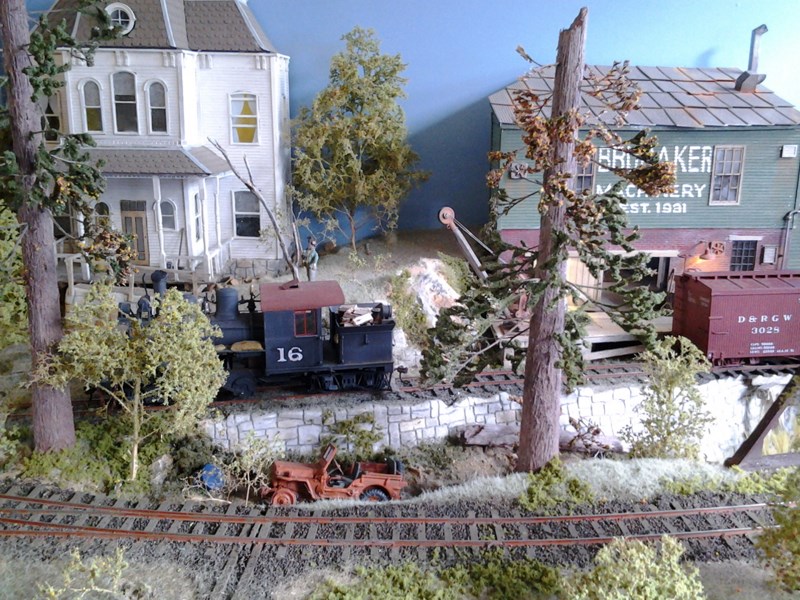
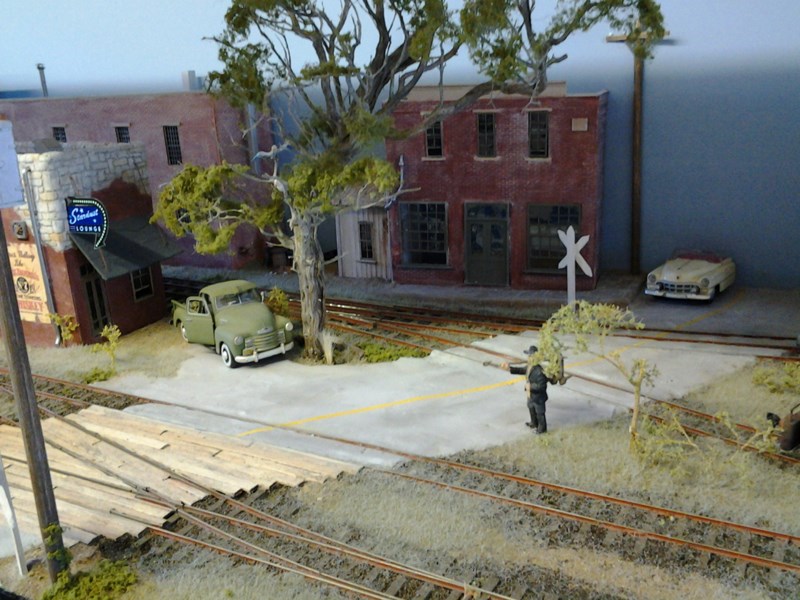
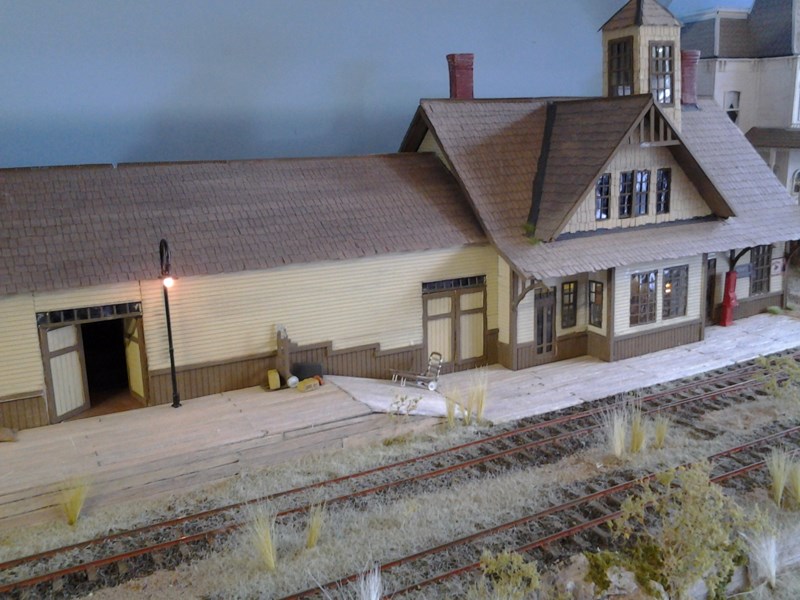
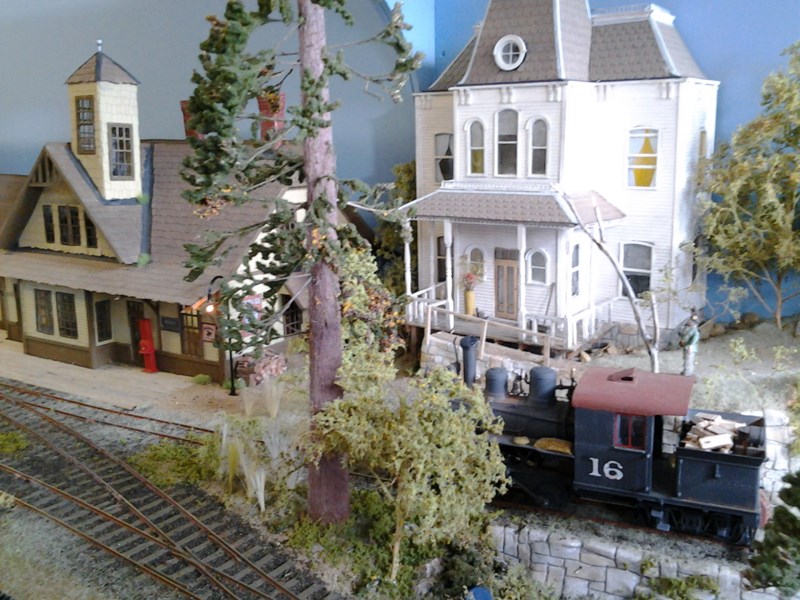
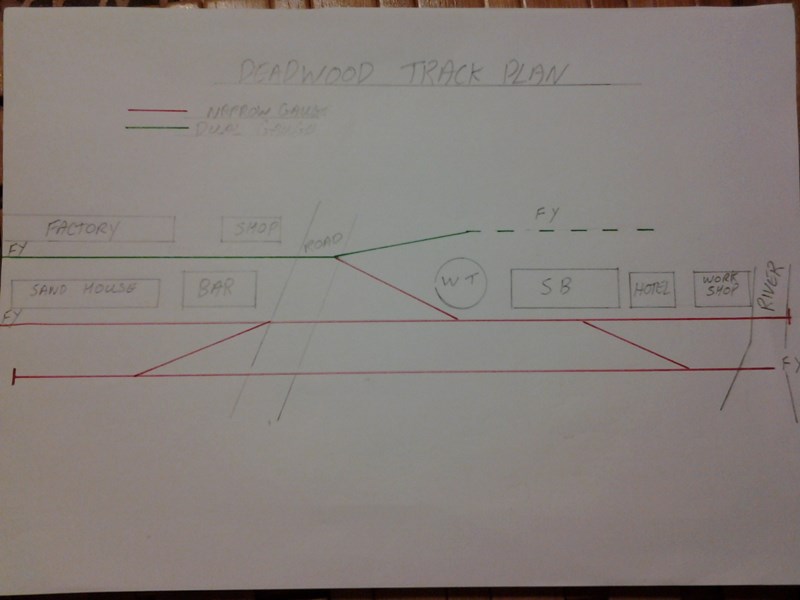
The layout is set in the early 1950's in a small fictitious town called Deadwood Colorado, and the railroad is in decline.
Stock: Bachmann, MMI, Precision Scale, AMS and scratch built.
Track: Narrow Gauge – Micro Engineering; Dual gauge is scratch built with wooden sleepers, and spiked Peco code 124 flat bottom rail.
https://mail.narrowgaugenorth.org.uk/index.php/85-public-news/exhibitors-previous?start=76#sigProId56ddcfd6a3
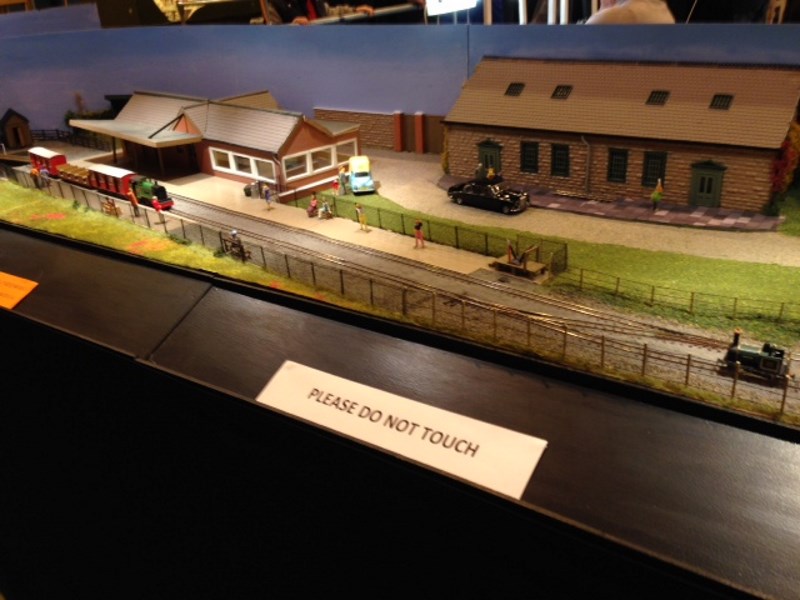
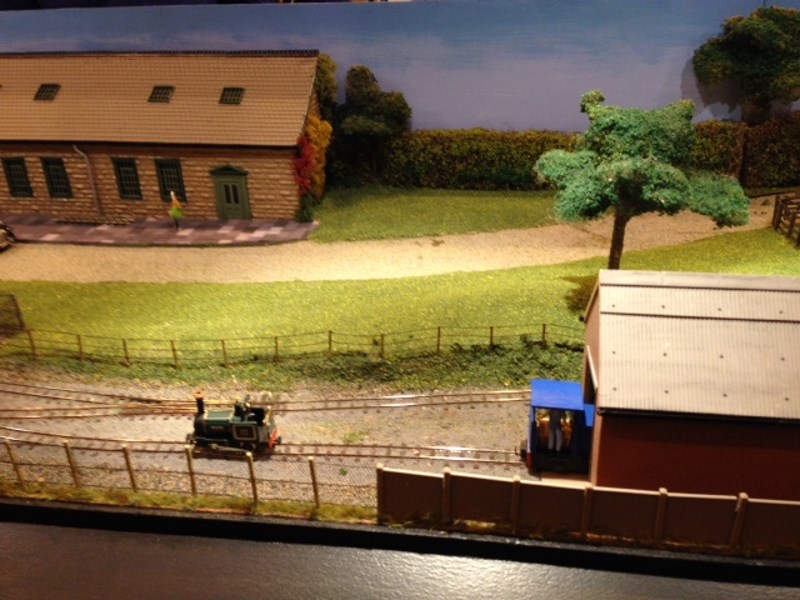
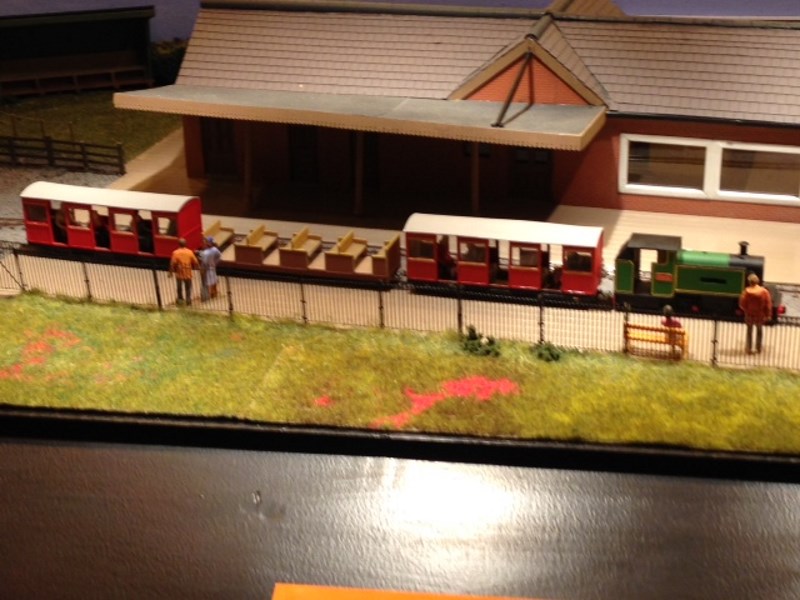
The layout represents a miniature railway somewhere in England in 2005. Obviously a tourist attraction and, although not based on a particular location, tries to be representative of the 38 15inch miniature railways in the UK. The track is Peco 009 mainline track with the 12inch mainline points. These are operated by wire in the tube in the scenic section although the ‘fiddle yard’ points are operated by SEEP point motors. The track is laid on thin cork, to give a ballast shoulder and then ballasted with fine ballast. The scenery is the usual mix of scatters from various manufacturers on top of polystyrene foam and ‘Mod Roc’ to get the various contours.
The main buildings are scratch built using a thick plastic and embossed plasticard and while not based on prototypes those who have visited Hoveton (Wroxham) on the Bure Valley Railway, may spot some similarity with the station buildings. The hut by the turntable is a kit from Unit Models, the turntable being a modified Peco ‘N’ gauge model.
Rolling stock is a mix of scratch and kit built items as there is no ready to run stock available in this scale/gauge, although more kits are becoming available from the likes of Unit Models, Avalon and Miniature Gauge Models; with a recent additions to the list of suppliers in the shape of Finelines and A1 Models. All stock is fitted with B&B 3mm couplings to allow for uncoupling in the station area. Trains can be up to 5 coaches in length but do vary depending on what is pulling them and what is set up in the fiddle yard. People are from various manufacturers and are both white metal and plastic.
09 modelling while in its infancy, is becoming more popular and with the advent of 3D printing more kits etc are becoming available.
The layout will also be appearing at the following shows :-
| Shepton Mallet | Narrow Gauge South West | 15/02/14 |
| York | York Model Railway Show | 19-21/02/14 |
-
Clee Valley Railway
Clee Valley Railway
-
Clee Valley Railway
Clee Valley Railway
-
Clee Valley Railway
Clee Valley Railway
-
Clee Valley Railway
Clee Valley Railway

https://mail.narrowgaugenorth.org.uk/index.php/85-public-news/exhibitors-previous?start=76#sigProId34e96fe3e8